


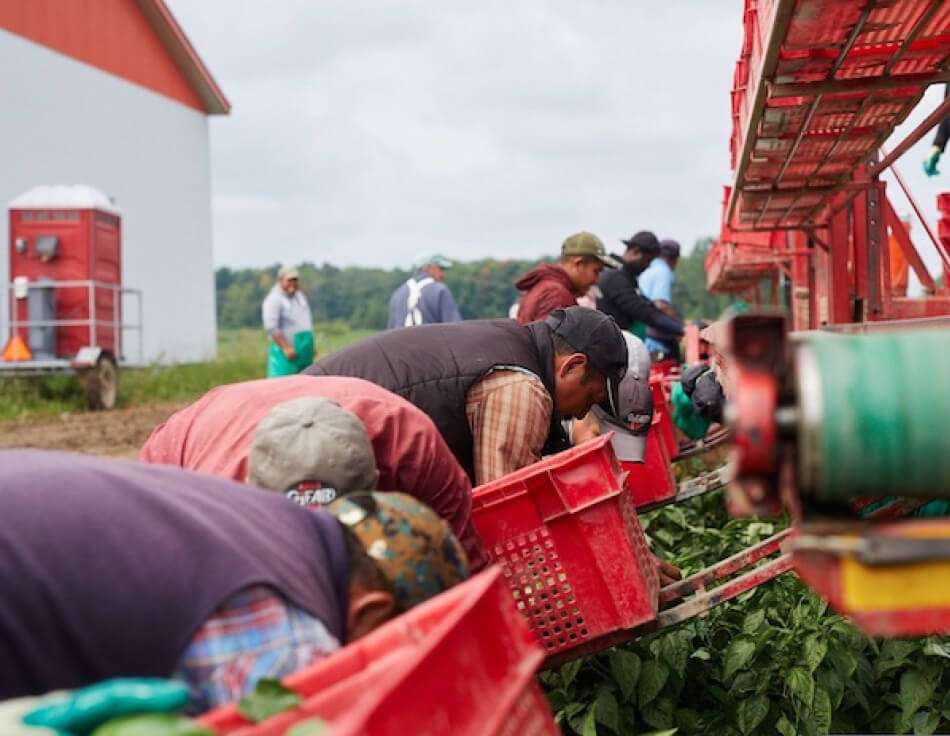

Multicultural Canada. North America’s melting pot. It is often framed as a vibrant mosaic: flag-waving unity, multicultural festivals, inclusive rhetoric, but for many Afro‑Indo‑Caribbean workers, particularly those coming through the Temporary Foreign Worker Program (TFWP), this shining image belies a troubling reality, one shaped by structural racism, tied visas, and exploitation.
The program that brought Caribbean workers to Canada decades ago still shackles them, not to fields, but to employers. TFWP’s structure (with closed work permits tied to a single employer) creates dependency and vulnerability. As Amnesty International’s 2025 report put it, “Many migrant workers … came to Canada hoping to secure a better future, yet instead, they felt they were treated like slaves. Labour exploitation of migrant workers is not the result of just a few unscrupulous employers. Instead, the programme enables abuses”
In 2023, Canada issued 239,646 closed work permits, with about 70 % of recipients coming from: Mexico, India, Philippines, Guatemala, or Jamaica (Human Rights Research). Meanwhile, the UN special rapporteur called TFWP a “Breeding ground for contemporary forms of slavery (Amnesty International)
Of the 44 workers Amnesty interviewed, most reported: unpaid wages, 70–80-hour workweeks, zero rest days, racist abuse, unsafe housing with no clean water, and threats of deportation. One Cameroonian woman was forced to work 70‑80 hours per week on a farm, fell ill, and was left without status when she protested (Amnesty International).
These conditions aren’t reserved for rural sectors alone. Afro‑Caribbean professionals in urban settings face subtler racism: being passed over for promotions, denied rentals, or told they “Don’t fit the culture.” This is Canada’s polite racism; quiet, systemic exclusion. It: damages mental health, erodes trust, and leaves trauma unaddressed.
In sectors like hospitality, construction, agriculture, and caregiving, employers can avoid hiring Canadian workers through loopholes in TFWP, even as unemployment rises. Labour experts warn such program expansion deepens exploitation rather than alleviating labour shortages (The Star).
Why should Canadians care?
In 2025, mainstream media continues to systematically underreport one of Canada’s most pressing human rights issues: the exploitation of temporary foreign workers who sustain our food supply, healthcare, and service sectors. Despite their essential contributions, these workers face tied visas that trap them with specific employers, precarious residency status that leaves them vulnerable to abuse, and discriminatory policies that deny them pathways to permanent residency. The silence around these injustices reflects deep structural problems in how news organizations: prioritize stories, allocate resources, and navigate political sensitivities around immigration and labor rights.
The media’s failure to adequately cover migrant worker issues reveals a troubling pattern of selective visibility that privileges some stories while marginalizing others. Shrinking newsroom budgets have decimated investigative journalism capacity just when it’s needed most to expose complex systemic problems.
Meanwhile, the very workers suffering these injustices often can’t speak out due to fear of deportation, or employer retaliation, creating a perfect storm of silence that allows exploitation to continue unchecked. It’s a democracy problem that requires citizens to: actively seek out these stories, support advocacy organizations, and demand that mainstream outlets stop treating migrant worker rights as a niche issue when they’re fundamental to our economic and moral foundations.
The consequences ripple across society:
- Food security: Tied‑visa workers are essential in agriculture and food processing. Any disruption impacts all Canadians.
- Public health: Workers suffer from mental health trauma, isolation, and inadequate healthcare, straining local services and communities.
- Human rights credibility: Canada’s global standing rests on Agenda 2030 ideals, like: decent work, reduced inequalities, and strong institutions. Yet tied visas and systemic exploitation contradict those Sustainable Development Goals (SDGs). Agenda 8 (Decent Work) and 10 (Reduced Inequalities) are directly undermined.
Under the United Nations 2030 Agenda, Canada has committed to:
-
- SDG 8: Protect labour rights and promote safe working environments for all.
- SDG 10: Empower marginalized racial and migrant communities.
- SDG 16: Ensure responsive, inclusive institutions.

Canada’s continued use of tied visas exposes real contradictions between its international commitments to the United Nations 2030 Agenda, especially: SDG 8 (Decent Work) and SDG 10 (Reduced Inequalities), and the documented experiences of systemic exploitation and discrimination among temporary migrant workers. These issues have not been fully remedied due to structural and legislative gaps, as well as challenges in policy coordination and enforcement.
The federal government is well aware of the abuses under the Temporary Foreign Worker Programme (TFWP), where tied visas bind workers to one employer. Incremental measures like inspections have been introduced, but comprehensive reform, such as replacing tied visas with open work permits to allow job mobility, has not been undertaken. There are reported: political, economic, and operational reasons for this inertia, including concerns about labour market impact, regulatory complexity, and competing stakeholder interests.
The government is reportedly developing a national strategy for the 2030 Agenda that focuses on: building awareness, ensuring integration across government agencies, fostering partnerships, and increasing accountability through transparent monitoring and reporting. Ongoing consultations and engagement with stakeholders are being used to identify and address policy gaps, including collecting better disaggregated data to assess progress and respond more effectively to systemic inequities.
Agenda 2030 serves as a global benchmark for Canada’s human rights credibility. Its goals require systemic changes. Scrutiny ensures Canada is held accountable and addresses contradictions between its stated values and actual treatment of marginalized populations. Without clear and coordinated action, Canada risks losing credibility and perpetuating systemic abuse.
Our challenge and collective vision
As engaged citizens, Canadians (including members of the diaspora and allies) have both the right and the responsibility to advocate for a fairer, more inclusive approach to migrant worker policy.
You can participate by contacting your elected representatives at provincial and federal levels, submitting petitions, participating in public consultations, and joining coalitions with other communities and organizations that share your priorities. Attend town halls, write letters, and use social media to raise awareness and demand independent oversight and clear government accountability. For the diaspora and allies, here’s how we move forward:
- Abolish tied visas and implement open work permits that allow job changes without fear. Migrant Rights Network calls explicitly for this transformation.
- Permanent residency for all food sector and tied workers, including those in Seasonal Agricultural Worker Programs and caregivers.
- Enforce national housing and labour standards across provinces and regulate recruiters and agencies.
- Fund mental health supports that are culturally competent to address trauma from migration, racism, and isolation.
- Demand government transparency and accountability—who gets hired, promoted, and protected—and create independent mechanisms to investigate anti‑Black discrimination.
- Build coalitions across Black, Indigenous, racialized, and non‑racialized communities to elevate these issues in boardrooms, unions, and municipal forums.
Our ancestors survived enslavement, indenture, and displacement. Today, Afro‑Indo‑Caribbean Canadians continue to contribute to Canada’s: social, economic, and cultural heartbeat. Yet the very structures meant to include us: immigration protocols, labour regulations, often trap us instead.
We are not a footnote in Canadian history. The choice is ours: tolerate polite exclusion, or transform Canada into a nation that honours inclusion indeed, not just in festivals and speeches.
This is our invitation to collective action, pandemic‑era coping‑story writing, Papageno‑effect resonance: to break invisible chains and to say, loudly and clearly, we belong here.
Stay in the loop with exclusive news, stories, and insights—delivered straight to your inbox. No fluff, just real content that matters. Sign up today!