

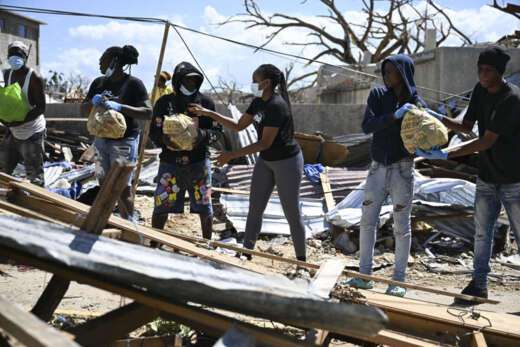

In the month since Hurricane Melissa swept across Jamaica, the island has been reckoning with both the force of nature and the force of human resilience. Melissa carved a path that was as unpredictable as it was unforgiving, uprooting livelihoods, straining vital infrastructure, and shaking communities already stretched by economic pressures. Yet during destruction, something else has been revealed; an unmistakable current of hope, carried forward by the people of Jamaica and strengthened by compassion from far beyond its shores.
Hope, in this moment, is not abstract. It is visible in neighbours clearing roads before official crews can reach them. It is found in families who lost nearly everything but still prepare a meal to share with others. It emerges in the determined resolve of utility workers patching power lines in driving rain, and in the steady hands of volunteers sorting supplies long after midnight. For all the havoc Melissa unleashed, it could not erode the deep instinct Jamaicans have to depend on one another when it matters most.
I grew up on an island in the North Atlantic. Its rugged shores and weather-beaten people stood the testament of time. Our very existence depended on the weather; weather that was beyond our control but raged havoc on our physical and emotional well-being. My father was a lifelong fisherman. He went to sea for ten-day trips, at the peril of the winds and lofty waves. He has an awe for the sea; he would say, “Don’t try to beat the sea; it’s always in charge.” This was never more apparent than a winter storm which brought 200 km/h winds, while my father and 14 other men rode out minute by minute on wave after merciless wave. At home, we knew nothing of their well-being. As the storm passed, we waited. He maintains, still, that you never “beat” Mother Nature, rather, prepare for the worse, hope for the best, as be on good terms with those around you.
Across Jamaica, stories continue to surface, stories of community centres transformed into shelters run jointly by church leaders and youth groups; stories of fishermen guiding rescue teams through flooded lanes; stories of small shop owners offering food and water even as their own stock dwindled. These moments are reminders that rebuilding begins not with blueprints or budgets, but with human beings choosing solidarity over despair.

Just as vital has been the compassion flowing in from abroad. Long before dawn broke after the storm, aid organizations from the Caribbean region, North America, and Europe announced deployment. Diaspora communities rallied instantly, launching fundraisers and coordinating shipments of tarps, generators, medical kits, and water filtration units. Governments pledged support, but just as significant were the gestures from individuals who have never set foot in Jamaica yet felt compelled to help.
This solidarity matters. It reinforces a truth that disasters often illuminate-while an island may be geographically small, its network of connection is vast. Jamaica has long shared its culture, music, athletic brilliance, and hospitality with the world. Now, the world has responded in kind: with generosity, with empathy, and with a recognition that recovery is not a local concern but a collective responsibility.
The road ahead will not be simple. Rebuilding will require careful planning, substantial investment, and the willingness to address vulnerabilities that Melissa exposed, from coastal erosion to ageing infrastructure. It is essential to remember that progress is not only measured in reconstructed bridges, or reopened businesses. It is measured in the strengthening of trust between communities and institutions, and in the belief that tomorrow can be steadier than yesterday.
As assessments continue and long-term plans emerge, leaders, both local and international, must ensure that the recovery process is equitable. Rural communities hit hardest must not be left at the margins. Small farmers whose fields were flooded must be supported as vigorously as urban enterprises, for it is the farmers and fisherpersons who put food on our tables. Children whose schooling has been disrupted must receive resources that allow them not only to return to class but to thrive. Moments like this test a society’s commitment to fairness, and Jamaica has an opportunity to lead by example.
There is, within this difficult chapter, the possibility of renewal. Melissa’s winds revealed weaknesses, but they also revealed strengths: a population that refuses to be defined by adversity, a diaspora that remains unwavering in its loyalty, and a global network of partners ready to stand alongside the island. Hope is already germinating in the way people speak to one another, in the way communities plan together, and in the way, strangers have chosen to care.
What comes next for Jamaica is the shaping of a future built on shared purpose. If the compassion shown in these early days is any indication, that future can be brighter, more unified, and more resilient than ever.
Stay in the loop with exclusive news, stories, and insights—delivered straight to your inbox. No fluff, just real content that matters. Sign up today!