

Author: Adrian Reece
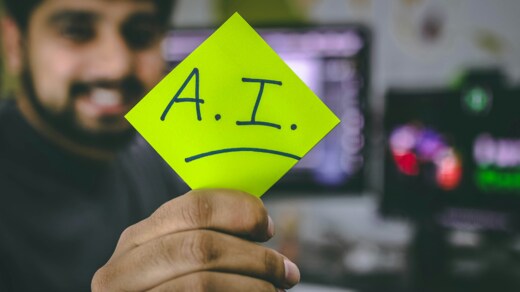
We are in a wholly digital age. In particular, 21st century technology has advanced rapidly. We have moved from things that were initially known as science fiction to making them a reality. Artificial intelligence has now become a thing that we use in our daily lives, also known as AI.
AI has been teased for decades across all forms of media, fiction, and non-fiction. Within the scope of this new technology, we see advancements across all forms of business, social media, videography, and even journalism. The aspects of what we use to make our lives easier have now become something that we have access to on our smartphones.
Nowadays, we see AI used in smaller capacities, such as Grammarly, which corrects your grammar, spelling, and sentence structure. Still, we also see things, like now, where you’re able to create entirely AI avatars that look like you, can speak, and you can even create content on social media through AI avatars nowadays.
There are pros and cons across all the metrics it is used for, one of which is that AI is now fooling people with videos that are not real, but still portray a particular narrative. This can be extremely dangerous in the legal world, but it can also be used to create content like movies and videos for consumption. Currently, on YouTube, there are full AI channels that use AI to generate content that would otherwise be very difficult to create, or very high budget to produce. This content can now be produced at no cost, or at high levels, with very minimal start-up investment.

Now, this poses a problem for the film industry. Would it be more advantageous to hire actors as opposed to creating an AI movie that would more accurately reflect books, cartoons, or live-action remakes of that particular series? There has been, in the last few years, a shift into transitioning animation to live-action film, and the issue has always been the CGI. The things that are possible in animation aren’t necessarily possible or tough to recreate in live-action, and with AI, these things would be much easier.
It puts into perspective; do we need actors? So, this is something that people across all industries have to consider: how it’s used, and if it’s used, where does that leave humanity in the job market? Where does that leave humanity in their livelihoods and careers in many of these industries?
The consideration we want to look at now is how AI should be used. While it is beneficial for crafting, or just for making our lives easier when creating things, we want to consider how it profoundly affects industries as a whole and where it replaces human intervention. Then there is also the question of how sophisticated it is, and whether AI can really reflect the humanity required in media, in writing, in expression? Can it really capture those things? Smaller micro-tasks, 100%, would definitely aid in those things, but they detach us from the broader aspects of what it means to be human and to create art.
AI would be most detrimental in the art and creation realm and industry, as it separates viewers from the profound emotional contribution of humanity and makes the media less relatable to people consuming it.
Stay in the loop with exclusive news, stories, and insights—delivered straight to your inbox. No fluff, just real content that matters. Sign up today!