


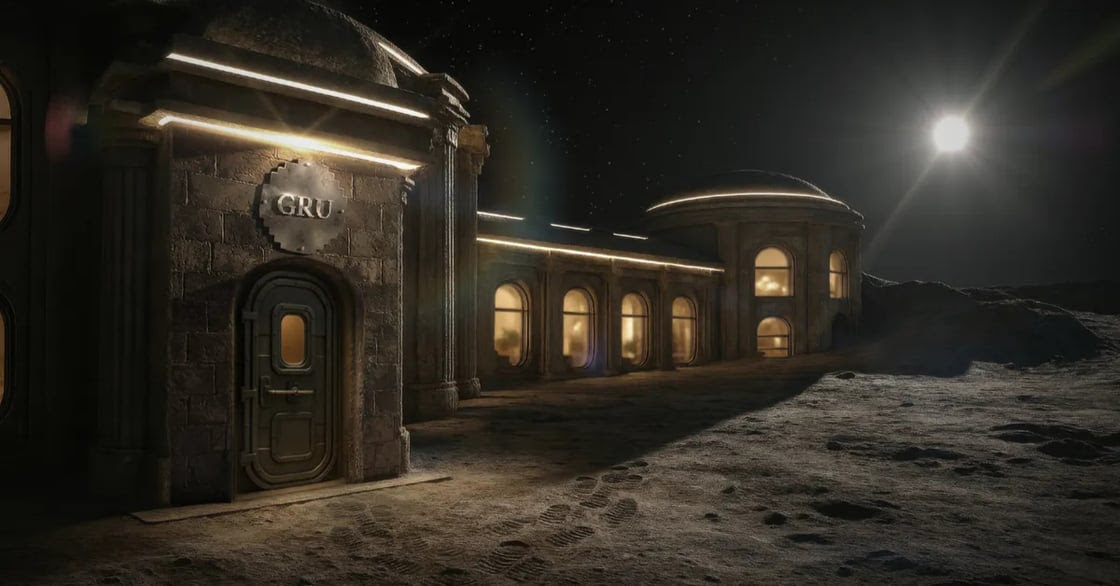

Some people are out here saying that the Earth is beginning to feel crowded. For those who feel the weight of “swarms of tourists” at every terrestrial landmark, the gaze naturally drifts upward. We are witnessing the first breaths of an era where “off-the-beaten-path” refers to a destination hundreds of thousands of miles away. California-based GRU Space has officially opened the gates, taking reservations for the world’s first lunar hotel, slated to welcome its first guests in 2032.
At the center of this cosmic ambition is Skyler Chan, a 22-year-old founder leading a team of just three people. To some, the idea of a three-person startup building a hotel on the Moon sounds “far-fetched,” yet history reminds us that the very concept of lunar travel was once dismissed as impossible before the 1969 landing. This initiative is laying the foundations for life beyond Earth.
The journey begins with the weight of serious commitment. Early access requires an “astronomically wealthy” status, with deposits ranging from $250,000 to one million.
Beyond the financial hurdle, applicants must pass medical, personal, and financial screenings to claim their place in history.

The roadmap to 2032 is paved with scientific rigor. In 2029, Mission I will launch a payload to test moon bricks, building materials created from lunar regolith (soil) and geopolymers. By Mission II, the team plans to deploy an inflatable habitat into a lunar pit to provide a natural shield against the Moon’s extreme temperature swings. These are the first iterations of a new human home. The initial 2032 structure will house up to four guests, offering the chance to moonwalk, or even play a game of golf in the low-gravity silence.
There is a psychological depth to this pursuit. GRU Space is offering a chance to cement your legacy. The company’s long-term vision involves a structure modeled after San Francisco’s Palace of the Fine Arts, serving as a jumpstart for a lunar economy that eventually reaches Mars. Backed by industry giants like: SpaceX, Nvidia, and Y Combinator, the dream has a foundation of serious technological investment.
As we look to the stars, the question shifts from “if” to “when.” We are watching the transition of humanity into an interplanetary species. For now, the world waits to see if these inflatable habitats will truly become our next frontier. In the words of the visionaries behind the project, we must simply shoot for the moon.
Stay in the loop with exclusive news, stories, and insights—delivered straight to your inbox. No fluff, just real content that matters. Sign up today!