
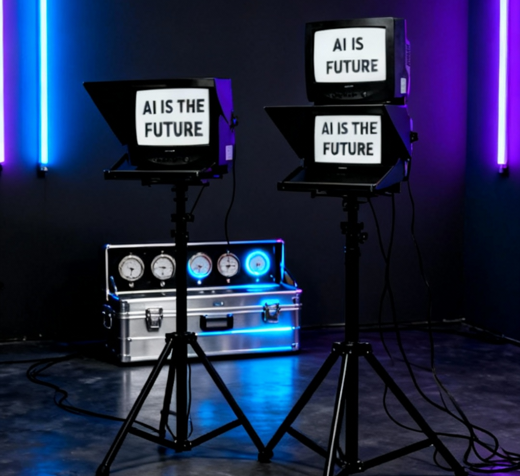

Artificial intelligence has been around for years, but only recently has it become a major part of everyday life. At first, it felt exciting, a new tool that could help with school, work, and creativity, but now, the tone around AI has shifted. Instead of curiosity, I see fear. Research is coming out about decreased brain activity, increased freshwater usage, and environmental damage caused by massive data centres. Suddenly, people are questioning whether AI is doing more harm than good.
I understand why. The environmental impact is alarming. The amount of water and energy used to power AI systems feels unsustainable, especially when the world is already struggling with climate change. It makes me wonder whether our technological progress is costing us the planet. At the same time, it feels ironic because AI is also being used to fight climate change. Scientists use it to predict climate patterns, track deforestation, and analyze massive amounts of environmental data. So, I cannot help but think, if AI is both part of the problem and part of the solution, then maybe the issue is not AI itself, but how we choose to use it.
Another major criticism is that AI is reducing brain activity and making us mentally lazy. I do not fully agree with that. I think AI is changing how we think, not eliminating thinking altogether. We live in a world where we are expected to juggle school, work, social lives, and financial stress all at once. Maybe AI is not making us less intelligent. Maybe it is teaching us how to manage information more efficiently.

Instead of spending hours on one task, we can now break things down, organize ideas, and learn faster. That does not feel like laziness to me. It feels like adaptation. Every generation uses the tools available to them. Just like calculators did not make people stop learning math, AI does not mean we stop thinking. It just means we think differently.
Still, I cannot ignore the ethical concerns. Bias in AI systems, privacy risks, and misinformation are real problems. Companies hold so much power over these technologies, and that scares me. If AI is shaping decisions about jobs, education, and even healthcare, then who is making sure it is fair? Who is held accountable when it causes harm? That is where regulation matters.
What frustrates me is how quickly people jump to extreme solutions like banning AI entirely. That feels unrealistic. AI is already deeply integrated into society. Removing it completely would cause more harm than good. Instead, I think we need responsible adoption. That means building AI ethically, powering it sustainably, and teaching people how to use it wisely.
For me, this whole debate feels bigger than just technology. It reflects our world, our burnout culture, our environmental neglect, and our fear of change. AI is not perfect. It has flaws, and it needs limits, but it also has potential.
So maybe the real ethical dilemma is not whether AI should exist but how we choose to shape it.
In the end, I do not think AI is making us worse. I think it is forcing us to question ourselves, our systems, and our priorities, and honestly, that might be exactly what we need.
Stay in the loop with exclusive news, stories, and insights—delivered straight to your inbox. No fluff, just real content that matters. Sign up today!