


I had an elder who used to say that the first sign the system is turning against you is when it takes away your ability to move. Not your house. Not your vote (not yet), your movement. Why? Well, when you can’t move, you can’t leave, and when you can’t leave, you can’t choose, and when you can’t choose, you are controlled, whether anyone admits it or not.
I want you to sit with that for a moment before we talk about jet fuel.
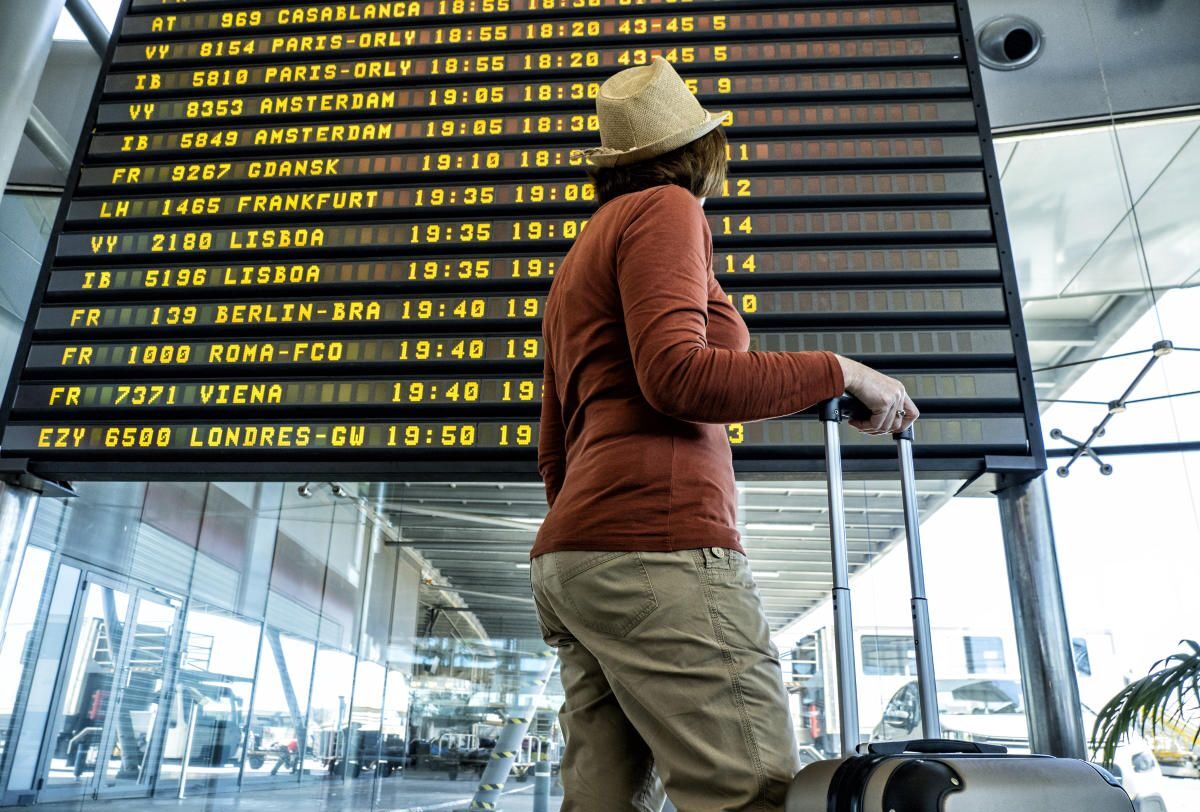
Right now, quietly, without the alarm bells that such a story deserves, the skies are closing. Planes are being grounded. Routes are being cancelled. The Caribbean routes (our routes, the ones that carry us home to Barbados, to Guyana, to Grenada, to Cuba, to St. Lucia, to the life we came from) are among the first to disappear. The official language being used is careful and clean, “No longer economically feasible.” “Schedule rationalization.” “Capacity adjustments.” Bureaucratic language designed to make you nod and scroll past.
Don’t.
We have seen this before. In 1973, the Arab oil-producing nations imposed an embargo on countries that had supported Israel in the Yom Kippur War. Within weeks, oil prices nearly quadrupled. Gas stations in the United States went to rationing systems, you could fill up only on certain days, based on your licence plate. Speed limits were slashed. Daylight saving was extended. Some stations served emergency vehicles only. Lines stretched around city blocks. The crisis did not stay in the fuel pumps. It moved through inflation, trade disruption, political upheaval, and social unrest, and it lasted, in its effects, for the better part of a decade.
The 1970s crisis changed how governments thought about who gets to move, who gets to access goods, and who bears the weight of scarcity.
The 1970s crisis changed how governments thought about who gets to move, who gets to access goods, and who bears the weight of scarcity. It made energy a national security issue, meaning governments began to treat fuel access as something to be managed, allocated, and, when necessary, rationed. The lesson the powerful took from that era was do we control the distribution of a scarce and essential resource.
What is happening right now
Starting in late February 2026 and accelerating through April, a jet-fuel and oil shock has triggered a cascade of airline cancellations and route suspensions across the globe. This is not a conspiracy theory. This is documented, traceable, and happening to people we love right now.
February 2026: Air Canada suspends all service to Cuba, running empty repatriation flights to bring back roughly 3,000 stranded Canadians. Air Transat and WestJet follow with Cuba cancellations through April 30th.
April 2026: SAS cancels approximately 1,000 April flights after jet fuel prices double in ten days. KLM cuts 80 return flights from Amsterdam. United Airlines reduces scheduled flights by 5%.
April 2026: Air Canada suspends: Fort McMurray–Vancouver, Yellowknife–Toronto, Salt Lake City–Toronto, and Toronto/Montreal–JFK routes. Lufthansa prepares to ground up to 40 aircraft.
May–June 2026: Air New Zealand announces schedule changes affecting roughly 1,100 flights and 44,000 passengers. The IEA warns Europe may have only six weeks of jet fuel remaining.
The Eastern Caribbean is already feeling it. In January, airspace restrictions caused hundreds of cancellations across: Puerto Rico, the U.S. Virgin Islands, Aruba, and nearby destinations. By April, routes serving: Anguilla, Antigua, Curaçao, and St. Lucia were disrupted. JetBlue cancelled more than 200 flights in a related regional wave. The pattern is surgical: low-frequency island routes, leisure travel, long-haul services with thin margins, in other words, the routes the diaspora depends on most, are the first to be cut.

The pattern that power never names
Here is what the mainstream coverage will not tell you plainly: scarcity is never distributed equally. When the powerful face a fuel shock, they find alternatives. When we face one, we lose access. Analysts are already noting that this shock is spreading through exactly the same channels as the 1970s: inflation, transport disruption, reduced household purchasing power, and the creeping normalization of rationing-style measures. The Philippines, Sri Lanka, Pakistan, Bangladesh, Myanmar, and several European nations are already implementing fuel rationing, reduced workweeks, and vehicle-use restrictions. These are a pattern.
The research is clear on this: fuel shocks rarely stay fuel shocks. They become political shocks. Social shocks, and historically, the communities with the least buffer, least financial reserves, least transport redundancy, least institutional protection, are the ones who feel the emergency first and longest. That is us. That has almost always been us. When I say us, I mean everyone who is not part of the wealthy elite.
When crises justify emergency tools, and those tools remain after the crisis ends, we call that policy precedent.
Now, I am not here to tell you that there is a secret room full of men who decided to cancel your flight to Barbados. What I am telling you is more disturbing and more grounded in evidence: you do not need a conspiracy for the outcome to be the same. Wealth concentration, institutional weakening, crisis-driven governance, and the normalization of emergency powers can produce centralized control without anyone signing a document that says so. When crises justify emergency tools, and those tools remain after the crisis ends, we call that policy precedent. The 1970s proved it. The pandemic confirmed it. This fuel shock is writing the next chapter.
What your government must be asked right now
Ask these questions: loudly, publicly, on record:
- What is the government’s plan to protect Caribbean diaspora travelers if route cancellations worsen through summer 2026, and who is being consulted from the community in building that plan?
- If fuel rationing or travel restrictions are implemented, what criteria will determine who gets priority access, and how will racialized, low-income, and immigrant communities be protected from bearing disproportionate impact?
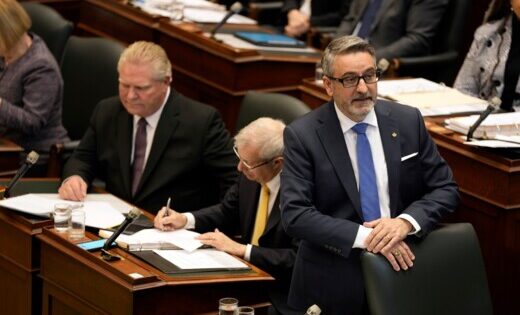
- Are emergency powers being considered or prepared in response to the fuel crisis? If so, what are the sunset clauses, meaning, how and when do those powers end?
- What is the state of our national fuel reserves, and how long would they sustain essential transport if the Strait of Hormuz disruptions deepen or extend into summer?
- Who in government is monitoring the specific impact on Caribbean, African, and South Asian diaspora communities whose family connections, economic remittances, and cultural continuity depend on these routes?
What this means for your family
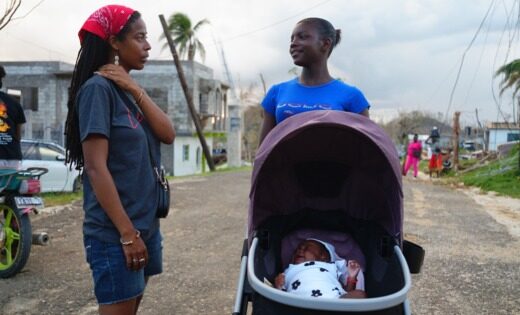
Think about what a Caribbean route suspension actually means in practice. It means your mother in Trinidad cannot visit the grandchildren she has been saving up to see. It means the elder who needs to attend a family funeral in Jamaica cannot get there without paying three times the normal fare, if the flight exists at all. It means the small business owner sending goods between islands faces disrupted supply chains and rising costs. It means the family in the diaspora that was finally going to bring everyone together this summer must make impossible choices. These are the everyday stakes of a crisis being reported in the language of economics rather than the language of humanity.
Marcus Garvey told us a century ago that a people without knowledge of their history is like a tree without roots. The history here is unmistakable: we have watched this before, we know how it ends for communities like ours when no one is fighting specifically for our interests at the policy table, and we know that the window to demand accountability is always shorter than we think.
The skies are not closed yet, but they are closing, and the question is whether you are paying attention, and whether you are willing to demand that the people who hold power answer for what happens next to your family, your freedom, and your ability to move through this world with dignity.
Movement is not a luxury. For us, it has always been survival.
Stay in the loop with exclusive news, stories, and insights—delivered straight to your inbox. No fluff, just real content that matters. Sign up today!