



Editor’s Note: We don’t let vital community stories disappear into the digital archive. This piece offers a perspective that is essential to our current moment, and it demands your attention.
The Ontario government’s announcement that elementary teachers will receive $750 for classroom supplies beginning in the 2025–2026 school year has sparked both cautious approval and pointed skepticism across the province.
Unveiled on Wednesday, March 11th, 2026, the initiative is being framed by the province as a practical response to a long-standing issue: teachers routinely spend their own money to equip their classrooms. According to government statements, the funding will be distributed through a Classroom Supplies Card, allowing educators to purchase essential materials without paying out of pocket or waiting for reimbursement.
The announcement, however, has raised immediate questions about timing, intent, and whether the measure addresses deeper structural concerns in Ontario’s education system.
In a formal press release, the provincial government said the program will ensure teachers have the materials they need in their classrooms without paying up front and described it as part of a broader effort to support student success. The statement positions the funding as both practical and necessary, emphasizing improved classroom conditions as a direct pathway to better educational outcomes.
Premier Doug Ford underscored this framing, citing personal observations as a catalyst for action. He described encountering teachers purchasing supplies with their own money, an experience he said highlighted the need for change. In his remarks, Ford stated, “The new $750 Classroom Supplies Card will give teachers across the province access to the resources they need, without forcing them to cover the costs themselves or wait to be reimbursed.”
Ontario’s Minister of Finance, Peter Bethlenfalvy, reinforced the government’s message, pointing to what he described as record investments in education. He emphasized accountability and the importance of directing funds to where they have the most immediate impact inside classrooms.
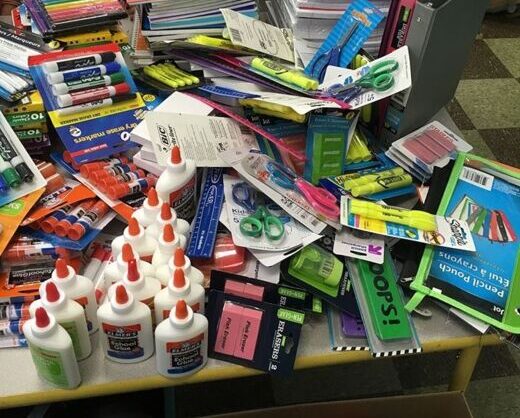
The program outlines a range of eligible purchases, including arts and crafts materials, classroom decorations, and basic supplies such as paper towels and tissue. While these items are essential to daily classroom functioning, their inclusion has also become a focal point of criticism.
Union leaders argue that the announcement, while helpful on the surface, risks reframing basic educational necessities as discretionary or supplemental. For many educators, the issue is not whether $750 will help. It will. Should this funding be necessary in the first place?
At Queen’s Park, representatives from the Elementary Teachers’ Federation of Ontario (ETFO), which represents approximately 84,000 educators, responded with measured concern. ETFO President David Mastin acknowledged that any investment in education is welcome but challenged the narrative surrounding the announcement.
He argued that essential classroom supplies should be positioned as a fundamental responsibility. Mastin also raised concerns about the broader financial context, referencing what he described as $6.3 billion in cuts to education funding in recent years.
In a statement, Mastin said the discussion itself signals a deeper problem: educators are being asked to negotiate for items that should already be guaranteed. Supplies such as: Kleenex, paper towels, pencils, pens and stationery stuff, he suggested, should not be up for debate.
ETFO’s official press release went further, framing the announcement as potentially strategic. The union pointed to the timing, ahead of what is expected to be a contentious round of central bargaining, as a reason for skepticism. While acknowledging that the government is recognizing a real issue, the union questioned whether the move is intended to influence public perception rather than deliver systemic change.
The release concluded with a broader critique of what it described as chronic underfunding in Ontario’s public education system. It called for stable, adequate provincial investment rather than short-term measures, warning against what it characterized as political theatre.

A similar perspective was offered by Martha Hradowy, President of the Ontario Secondary School Teachers’ Federation (OSSTF/FEESO), which represents approximately 55,000 members. Speaking to Global News on March 11th, 2026, Hradowy used a vivid analogy to illustrate her concerns: providing teachers with funds to buy supplies, she suggested, is akin to addressing symptoms rather than causes.
Her comparison (likening the policy to giving a firefighter money to purchase a hose) underscores a central critique shared by multiple stakeholders: that responsibility for basic resources should not be shifted onto individual educators, even indirectly.
These responses highlight a broader tension in the conversation around education funding. On one hand, the government’s initiative acknowledges a widely documented reality: many teachers routinely spend hundreds of dollars of their own money each year to ensure their students have the tools they need. On the other hand, unions argue that such spending should never have been necessary, and that addressing it through capped individual allocations may fall short of meaningful reform.
From a policy perspective, the program raises several unresolved questions. Will the $750 allocation be sufficient across diverse classroom needs? How will eligibility and accountability be monitored? And perhaps most importantly, does this initiative signal a shift toward more comprehensive funding solutions, or is it a standalone measure?
For parents and students, the immediate impact may be positive. Classrooms equipped with adequate supplies can support more engaging and effective learning environments. However, for educators and advocates, the focus remains on sustainability and equity, ensuring that all classrooms, regardless of location or demographic factors, have consistent access to resources.
The story ultimately reflects a familiar dynamic in public education debates: agreement on the problem, but disagreement on the solution. Few dispute that teachers need support. The question is whether this policy represents a meaningful step forward or a temporary fix within a larger, unresolved funding landscape.
As negotiations approach, the conversation is likely to intensify. For now, the $750 supply card stands as both a practical intervention and a symbolic flashpoint, one that reveals as much about the state of Ontario’s education system as it does about the politics surrounding it.
Stay in the loop with exclusive news, stories, and insights—delivered straight to your inbox. No fluff, just real content that matters. Sign up today!