


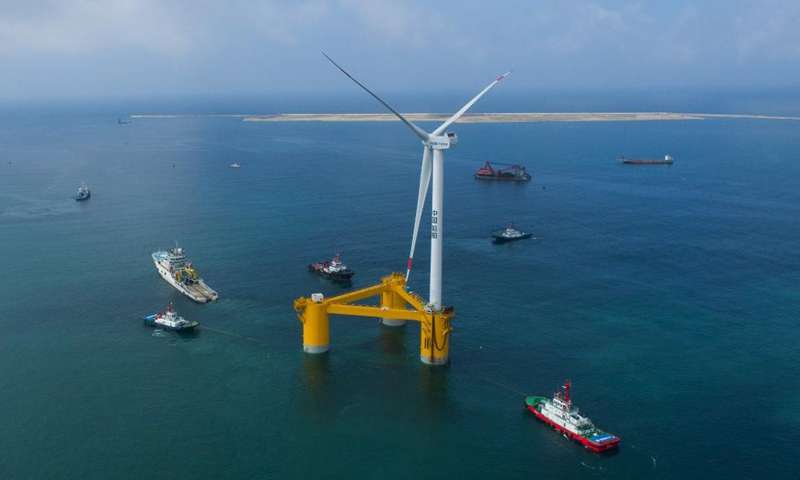

China has just unveiled a turbine that could change the whole landscape of clean energy. Built by Huaneng Group and DongFang Electric corporations, this prototype has already set new records. According to the developers each of the turbines can generate 17,00 megawatts annually, which would be enough to provide for approximately 6,300 households. This amazing achievement doesn’t just show the steps that are being taken towards renewable energy, it also shows China’s commitment to clean energy.
Engineering a mega turbine
The turbine’s structure is just as impressive as its power. The nacelle, which contains the generator, is on a 489-foot tower, with blades that stretch to a diameter of 860 feet. The size means that each round of the blades covers 53,00 feet, approximately eight football (soccer) fields. By generating more electricity per unit, these turbines reduce the number of installations needed, which can help with costs and efficiency.

Built to resist the harshest seas
Offshore wind turbines face problems, such as massive waves and extremely strong winds. The Chinese prototype is designed to withstand 73-foot-tall waves, and typhoon level winds that are more than 73 miles per hour. This is quite crucial for offshore wind projects that can operate in deeper and more dangerous waters. As China prepares to test this turbine off the coast of Yangjiang, it will prove the turbine’s real durability in real life conditions.
Expanding wind energy to deeper waters
Most current offshore wound turbines rely on fixed bottom turbines that are attached to the seafloor. While this is quite effective in shallow waters such as the North Sea, this can cause issues in deeper waters such as the oceans, which go as deep as 12,00 feet. According to the Global Wind Energy Council, about 80% offshore wind potential lies in waters too deep for fixed-bottom foundations. Floating turbines could provide access to these deeper waters, providing even more renewable energy.
Global impact on clean energy
The development of floating wind turbines could change energy strategies worldwide. Countries like Japan have struggled with deeper waters presenting an issue, but now there is a solution. Japan already has a goal set of producing 30-45 gigawatts of wind energy by 2040, with floating turbines expected to play a crucial role. By unlocking the use of deeper waters, this would allow countries to maximize their renewable energy output while decreasing the amount of fossil fuels being used.
A turning point in renewable innovation
China’s record-breaking turbine shows the potential of large floating wind farms. While offshore wind projects are still more expensive than onshore ones, the potential of energy that has not been utilized, could cause these projects to be highly competitive in the near future. As one report noted, “Floating offshore wind turbines open a whole new playing field for energy companies.” If successful, this innovation could mark a new step towards a more sustainable future.
Stay in the loop with exclusive news, stories, and insights—delivered straight to your inbox. No fluff, just real content that matters. Sign up today!