

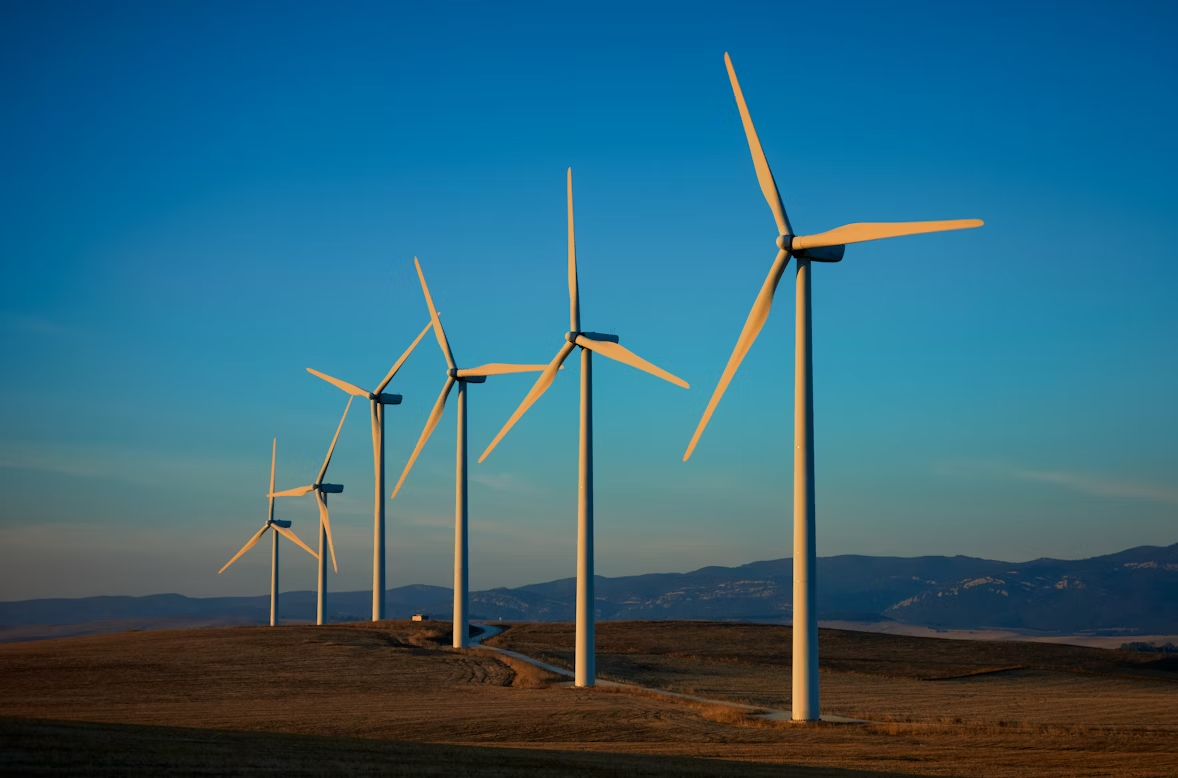

For the first time in recorded history, renewable energy sources have produced more electricity than coal across the globe. According to a new report released in October 2025 by Reuters, the world’s total renewable output which includes solar, wind, and hydroelectric power officially surpassed coal in the first half of this year.
This marks a major turning point in global energy. Coal, which has powered industries and homes for nearly two centuries, is now being overtaken by cleaner, cheaper, and more sustainable sources. This big shift isn’t just a win for activists; it shows that real change is happening around us and we may be looking at a greener and more sustainable future.
A slow but powerful revolution
The transformation has been years in the making. Across the world countries have been racing to install solar panels, wind turbines, and large-scale batteries to meet the rising demand for clean energy. China, the world’s largest energy consumer, led the charge this year with a 43% increase in solar power and a 16% rise in wind generation. India, Brazil, and parts of Africa have also decided to turn to more sustainable sources, which are driven by cheaper technology and international investment.
A key reason for this growth is falling costs. A decade ago, renewables were expensive compared to fossil fuels. Today, advances in materials, large-scale production, and competition have made wind and solar some of the most affordable power sources available. Industry analysts now estimate that by 2029, the global renewable energy market could reach $2 trillion USD.

Global projects powering the future
Some of the biggest energy projects of the decade are now clean ones. In the United Kingdom, the companies Masdar and Iberdrola have begun construction on a $5.2 billion offshore wind farm that will supply electricity to over a million homes. Meanwhile, Chinese firm Ming Yang Smart Energy announced plans to invest up to £1.5 billion in a new wind-turbine factory in Scotland, showing that renewable development has become both an energy strategy and a global business.
Even Africa, long left behind in global energy development, is becoming a center of attention. The European Union recently pledged $600 billion to finance clean-energy projects on the continent, aiming to connect remote regions to reliable and renewable electricity.
The challenges ahead
Despite this amazing advancement, there is still a long way to go. Solar and wind power depend on the weather, meaning electricity production can go up, or down. Without better energy storage, or smarter grid systems, countries can still face shortages.
The second challenge is infrastructure. Many developing nations do not have the grid systems and battery storage needed to handle large amounts of renewable electricity. Finally, there’s the question of global fairness: as wealthy nations transition faster, poorer ones must be supported to make sure the entire world has a more sustainable future.
A turning point for the planet
Still, this achievement is something to be proud of. After decades of warnings about climate change, the world is finally seeing results. Every solar panel, wind turbine, and hydro dam built helps to lesser the use of fossil fuels. The rise of renewables over coal represents not just an environmental victory, but how raising awareness about something does cause results.
As we are about to end this year off one thing is clear, we might just be looking at a better and cleaner future for our planet. This moment marks not the end of fossil fuels, but the beginning of a future we dreamed of.
Stay in the loop with exclusive news, stories, and insights—delivered straight to your inbox. No fluff, just real content that matters. Sign up today!