

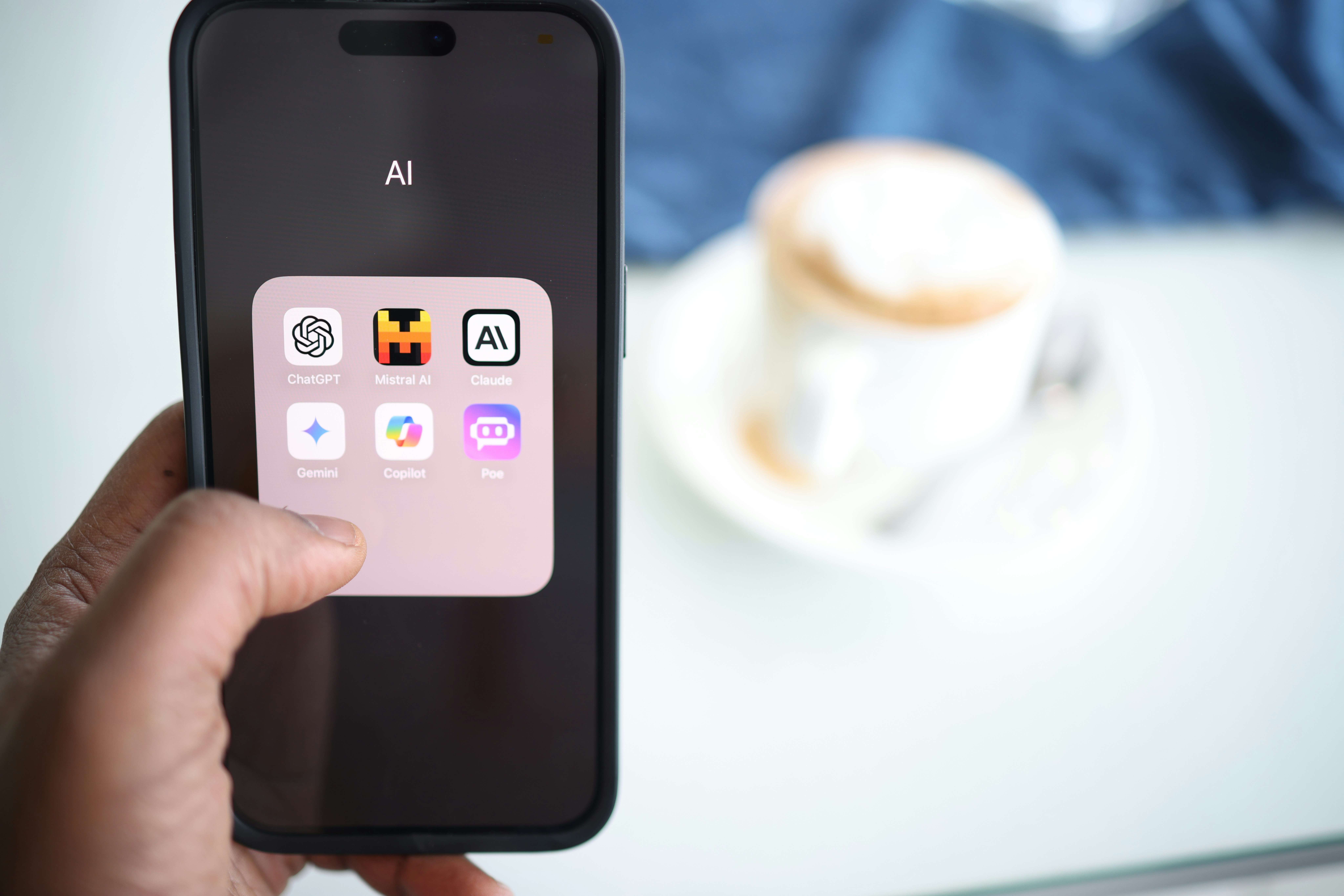

When I sit with my council, we often discuss the weight of the unavoidable. We look at the world through the lens of what is happening, and through the soul of why it is happening. Today, the data brings us to a crossroads of human labour and digital dependency. A January 2026 report on artificial intelligence adoption has revealed a profound shift in our global landscape: Brazil has emerged as the most AI-addicted country in the world.
“We are leaning heavily on tools that may eventually reshape the very nature of our humanity.”
In my practice, I often tell my clients that vulnerability is a strength. We must be vulnerable enough to admit that as our communities strive for equity and economic stability, we are leaning heavily on tools that may eventually reshape the very nature of our humanity. The research conducted by Check Point examined 20 nations, measuring where AI usage is growing fastest and how people perceive these automation tools. The findings are a reflection of a global workforce in transition.
The Latin American Digital Surge
The data reveals a striking trend: Latin America currently shows the highest AI dependency rates. While Brazil leads the charge, Argentina, Colombia, and Mexico all rank within the top 10 most reliant nations. To understand the scale of this, we must look at the traffic growth for major platforms like ChatGPT, Gemini, and Claude.
In Brazil, ChatGPT traffic grew by more than 14 times in a single year, a staggering 1,406% increase. The study utilized Microsoft data to identify regular users, those engaging with AI for at least 90 minutes monthly. In Brazil, 15.6% of the working-age population meets this threshold, and 83% of knowledge workers have integrated generative AI into their professional routines. Perhaps most telling is the level of trust: nearly two-thirds of the studied requests in Brazil ask AI to handle entire tasks independently.

As a journalist, I believe it is my duty to be transparent about my editorial thinking. When I see that 64% of tasks in Brazil are fully automated by AI, I wonder about the psychological impact on the worker. Are we becoming more efficient, or are we delegating our critical thinking?
In Singapore, which ranks second in AI reliance, the focus is squarely on speed. Nearly 60% of the working-age population uses Large Language Models (LLMs) for at least 90 minutes every month, the highest rate of regular use in the study. Here, 88% of knowledge workers use generative AI, and two-thirds of residents believe these tools help them work faster.
Our neighbours in Colombia and Mexico reflect a similar embrace, though with a different emotional tone. In Colombia, 65% of people report having “more fun” with these tools, while 80% of professionals rely on LLMs at work. In Mexico, 82% of knowledge workers have integrated these models, with half of all requests seeking fully automated solutions.
“We are the subjects of a massive global experiment.”
We must model how to think through these complex issues. We are the subjects of a massive global experiment. Experts predict that within a few years, a significant portion of online searches will bypass traditional engines like Google in favor of AI chatbots. This shift applies to technical fields and creative work alike, as new tools turn simple text descriptions into professional-quality visuals in seconds.
As your community educator, I concede that these tools offer undeniable advantages for those of us fighting for equity in a fast-paced economy. However, we must remain objective. The high reliance in Latin America and Singapore suggests that AI is becoming unavoidable for most of us.
The goal of sharing this data is to build our collective media literacy. By understanding that countries receive scores based on traffic growth, task delegation, and public trust, we can better navigate our own relationship with technology. We must ensure that as we move toward a future where AI handles our tasks, we do not lose the community-first lens that defines our strength.
We are more than our data points.
We are the consciousness that directs them.
Stay in the loop with exclusive news, stories, and insights—delivered straight to your inbox. No fluff, just real content that matters. Sign up today!