
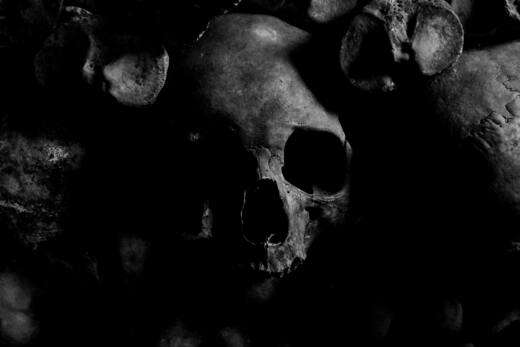

Throughout the centuries, human beings have always dreaded what might happen to them after their death. Most ancient communities believed their dead would return as vampires, ghosts, or spirits. In order to stay safe, they created strange and sometimes terror-inspiring ways of making sure that their dead stay underground.
In ancient Egypt, Pharaohs were also buried with servants, guards, and even family members at times. They would be killed so that they could follow the pharaoh into the afterlife. One of these early monarchs, Hor-Aha, had 35 people buried alongside him, and later rulers had even more than him. They believed that it was an honour and a part of the procedure after death.
Archaeologists in Turkey found a grave where the body was cremated and surrounded by bent nails and was plastered with lime and bricks. The nails may have been used to “pin” the soul so it could not escape. The lime and bricks plastered over the grave were used to trap something dangerous within. This suggests that the dead person may have been thought to come back in some dangerous form. Other people in Ireland and Britain were buried at crossroads. These were usually people who had died in sad, or bizarre ways, such as by suicide. The idea was that crossroads confused spirits, so they wouldn’t be able to return and haunt other people. This was even mentioned in Shakespeare’s plays and continued in the 1800s until it was banned.

The same burial rituals were practiced in other parts of the world as well. In some Roman and ancient Greek tombs, people placed bodies under heavy rocks or went to the extent of spearing spikes through the bones. These were not just done for keeping the corpses in place, these were rituals that were performed in terror that the dead would come back to life. The corpses were also sometimes buried with protective tokens like coins, amulets, or trinkets that would repel evil spirits. These were meant to protect both the dead and the living from supernatural attacks. The fact that the practices were widespread across many cultures suggests that fear of the undead was pervasive and severe.
In Poland, people were buried in a special way so that they wouldn’t rise as vampires. Archaeologists found dead people with sickles across their necks, or bellies, padlocks on their toes, or heads chopped off their bodies. These were all means of keeping the dead from getting up again or causing harm to others. As an example, the sickle would cut the person if he tried to sit up. The padlock on a severed head would completely stop movement.
These ancient funeral rites may look strange today, but they were based on real fears and belief systems of the time. People didn’t understand disease, or death as we do now, so they relied on symbols and rituals to ward themselves off. These rites lead us to believe that fear of the unknown was always a component of life, and sometimes, it led to some pretty weird ways of dealing with death.
Stay in the loop with exclusive news, stories, and insights—delivered straight to your inbox. No fluff, just real content that matters. Sign up today!