


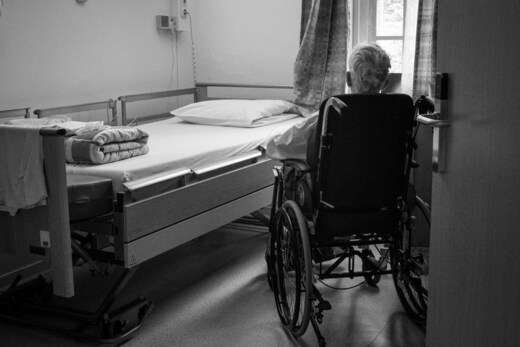

Another day passes for dozens of adults with developmental disabilities across Ontario, people whose homes have become hospital wards designed by systemic failure. The Ontario Ombudsman’s latest report reveals a troubling pattern: individuals confined for months, sometimes years, in settings ill-suited to their needs, their worlds shrinking to the dimensions of a single room.
As I sat with the report, my council of writers reminded me that journalism at its best bears witness. The 55 cases investigated represent lives interrupted, dignity compromised, rights violated. These are people physically and chemically restrained, isolated from community, and experiencing declining health despite not requiring acute medical care.
The problem, as the Ombudsman meticulously documents, stems from a fractured system. The Ministry of Children, Community and Social Services and the Ministry of Health operate in silos, leaving vulnerable people “parked” in hospital beds.
This is inhumane.
What makes this situation particularly troubling is the economic paradox at its heart. Research shows it costs $770 per day to support a person in an Alternate Level of Care hospital placement. Yet, community-based developmental services could provide better care for less than half that amount. The financial argument aligns perfectly with the moral one making this not just a tragedy but a failure of logic.
The numbers tell part of the story: more than 53,000 adults with developmental disabilities wait for developmental services in Ontario, with over 28,000 specifically waiting for supportive housing. These statistics represent dreams deferred, potential unrealized, families stretched to their breaking points.

As Niko Pupella, President of the Council of Community Living Ontario, states unequivocally, “All people with disabilities have the right to live and participate in the community. Forcing people to live in hospitals is a clear violation of their rights.”
The Ombudsman’s 24 recommendations (all accepted by the provincial government) provide a roadmap forward. They emphasize proactive transition planning, appropriate community options, and improved oversight. Acceptance is only the first step; implementation requires investment, coordination, and political will.
What happens next requires community engagement, advocacy, and a collective insistence that hospitals are not homes. The solutions exist; they are evidenced-based, cost-effective, and fundamentally aligned with our values as a society.
The question now is whether we will act on what we know. The report has confirmed what many in the developmental disability community have long understood: when systems fail people, people must challenge systems. The path forward requires a shift in how we value every member of our community.
For those wishing to learn more or get involved, visit www.Waiting2Belong.ca. There, you will find opportunities to be part of the solution Ontario’s developmental disability community desperately needs.
Stay in the loop with exclusive news, stories, and insights—delivered straight to your inbox. No fluff, just real content that matters. Sign up today!