

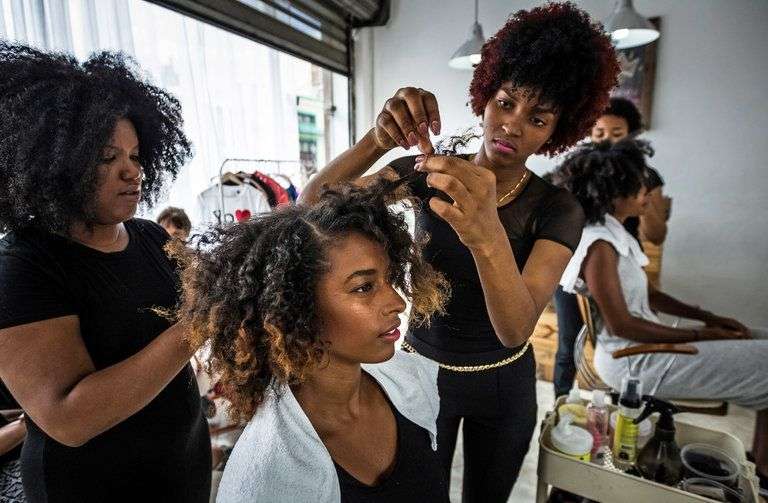

The revelation that hair products marketed to Black women across Canada contain harmful chemicals presents a matter of environmental justice. When we reach for that familiar relaxer, or conditioner, few of us consider we might be applying formaldehyde, phthalates, or heavy metals directly to our scalps. Yet, research consistently shows these substances lurk in products lining our beauty supply store shelves.
Recent studies have uncovered a disturbing pattern: Black women who frequently use chemical straighteners and dark hair dyes face up to 51% higher risk of developing breast cancer. For our hairdressers and salon professionals (those who spend their days helping us look our best) the occupational exposure creates an even greater health burden. These chemicals infiltrate our bodies, disrupting hormones and potentially altering our health trajectories.
Last week, my inbox contained an email from Cosmetics Canada that initially seemed promising. Health Canada updated their Cosmetic Notification Form on October 6, 2025, with changes including clearer ingredient naming requirements and a new “Fragrance Allergen” checkbox. These modifications aim to improve transparency about what goes into the products we use daily.
The email explained that manufacturers must now provide either the INCI (International Nomenclature of Cosmetic Ingredients) name, or chemical name for each ingredient. Additionally, products containing certain hazardous substances must now include warning labels, with error messages appearing if these aren’t provided during notification.
Is this enough?

While these administrative tweaks represent a step in the right direction, they fall short of addressing the core issue. The notification system itself comes with a crucial disclaimer: it “does not constitute approval for sale by Health Canada” and “is not an agreement that the product…complies with all legislative requirements.” Essentially, the responsibility remains entirely with manufacturers and importers to ensure safety.
What we truly need is proactive regulation that prevents harmful products from reaching our communities in the first place. The European Union bans numerous substances still permitted in Canadian cosmetics. Why should our standards be lower?
The path forward requires collective action. We must demand full ingredient disclosure, including fragrance components and contaminants. We need targeted health screenings for those most at risk. Most importantly, our community deserves education about safer alternatives and support for salons committed to non-toxic practices.
Health Canada’s recent changes acknowledge the problem exists, but meaningful protection requires more than paperwork revisions. It requires valuing Black women’s health as much as our beauty and recognizing that the two should never be mutually exclusive.
Stay in the loop with exclusive news, stories, and insights—delivered straight to your inbox. No fluff, just real content that matters. Sign up today!