


Radio Free Europe has reported that a growing number of public infrastructure projects across the European Union are being carried out by Chinese state-linked companies, often without publicly accessible information about bidding procedures, contract awards, or pricing. According to the outlet, documentation that would normally allow citizens to evaluate transparency and value for money is frequently unavailable.
This lack of disclosure has raised concerns among transparency advocates and policy analysts, who argue that public–private arrangements of this scale require heightened scrutiny. Without clear tender records, or published contracts, it becomes difficult to assess whether procurement rules have been followed or whether public officials are being held accountable.
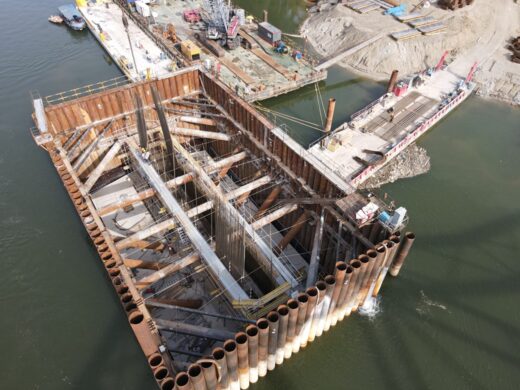
One example frequently cited is a bridge currently under construction over the Sava River in Serbia. Portions of the bridge are being fabricated in Jiangsu Province, China, at a facility owned by China State Construction Engineering Corporation. Approximately half of the structure has reportedly been delivered to the construction site, with completion expected by the end of 2026.
What remains unclear, however, is whether the project was subject to an open public tender. According to reporting and public records reviewed to date, no accessible tender documentation has been identified for this project or for dozens of similar infrastructure initiatives across parts of Southern Europe and Italy. The bridge is reportedly valued at €94.1 million, yet detailed cost breakdowns and information about fund allocation have not been made public.

These practices appear to diverge from procurement transparency standards that formally apply across the EU and in many other jurisdictions. Domestic firms are typically required to register, bid, and disclose financial details, while some foreign firms appear to operate under alternative arrangements negotiated directly with governments. The legal basis for these exceptions, and their long-term economic implications, remains opaque.
Comparable transparency concerns have been raised outside Europe. In Ontario, for example, the provincial government has signed infrastructure and development contracts worth billions of dollars that are not publicly disclosed. Government representatives have stated that confidentiality clauses protecting corporate privacy limit what can be released. As a result, citizens are unable to review the full terms of agreements made on their behalf.
This lack of disclosure raises legitimate questions: What guarantees exist that contracted firms will meet job-creation commitments? How are public funds protected if projects fail or companies withdraw? What mechanisms ensure that accountability extends beyond the signing of contracts?
Additional concerns have emerged around security arrangements at certain overseas construction sites. In Serbia, armed Chinese personnel have reportedly been stationed within the bridge construction zone. Serbian authorities have stated that their role is to protect Chinese workers. While not unprecedented globally, the presence of foreign armed personnel on EU-linked infrastructure projects has prompted debate about jurisdiction, sovereignty, and oversight.
Historical examples add to public unease. In a past Canadian mining project involving a Chinese corporation, the company reportedly secured approval by promising local employment. Subsequent operations allegedly relied heavily on imported labour, with environmental remediation costs later falling to regional authorities. Details of the tender and contractual obligations were not made public, limiting post-project accountability.
Taken together, these cases point to a recurring pattern: large-scale infrastructure agreements negotiated behind closed doors, justified by legal technicalities, and insulated from public review. Whether driven by expediency, geopolitical strategy, or economic pressure, such arrangements place democratic accountability at risk.
For citizens, the lesson is straightforward: transparency is the safeguard that ensures public money serves the public good. Buyer beware.
Stay in the loop with exclusive news, stories, and insights—delivered straight to your inbox. No fluff, just real content that matters. Sign up today!