
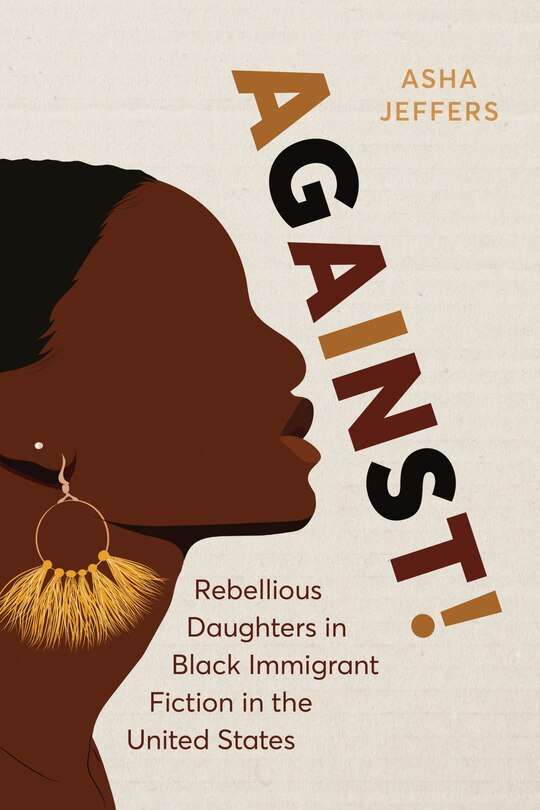

On Friday, September 26th, 2025, Toronto welcomed one of its own home. Family, friends, and community filled A Different Booklist for the launch of Dr. Asha Jeffers’ new book, Against! Rebellious Daughters in Black Immigrant Fiction in the United States. The evening marked the return of a scholar whose work reshapes how we understand identity, migration, and rebellion.
Jeffers, recently tenured as an Associate Professor of English and Gender and Women’s Studies at Dalhousie University, stood in front of her parents and supporters, reflecting on her roots. “Toronto shaped my intellectual and personal growth,” she told the audience. The city, she explained, gave her the foundation to write a book that moves beyond her doctoral thesis into new and urgent territory.
Her research focuses on literature centering children of immigrants (the second generation) and how gender shapes their experience. This book builds on that passion. Unlike her academic dissertation, Against! takes a broader look at the narratives of daughters who: resist, rebel, and redefine what it means to live between cultures.
Jeffers draws on the works of: Paule Marshall, Edwidge Danticat, Chimamanda Ngozi Adichie, and Taiye Selasi. Through their stories, she explores how race, gender, ethnicity, and migration collide to form a unique pattern of rebellion. These characters refuse the roles assigned to them by family, community, or society at large.
During the event, Jeffers answered questions from the moderator with candor. She explained her motivation: to highlight the tensions Black immigrants face in the United States. Many are forced to navigate between the “model minority” expectations imposed on immigrants, and the respectability politics shaping African American life.
She put it plainly, “By showing how Black migrants and their children negotiate these pressures, we begin to understand rebellion not as destruction, but as survival.”
The book unfolds across six sections:
- Introduction: Against
- Chapter 1: Rebelling in the In-Between
- Chapter 2: Rebelling Against Repetition
- Chapter 3: Self-Destructive Rebellion
- Chapter 4: Rebelling Against Stereotypes and Confinement
- Conclusion: The Failure of Immigrant Blackness

The structure makes her argument clear; rebellion takes many forms, and each speaks to the fractured, layered experiences of immigrant daughters.
Audience members at the launch didn’t just listen. The room buzzed with dialogue about: family, gender, and migration. Listeners shared their own reflections, moved by the themes Jeffers brought forward. The evening felt less like a lecture and more like a conversation, one that affirmed the power of storytelling to shift perspective.
On the back cover, the description captures the essence of the work: “Immigrant and second-generation writers mobilize complicated familial relationships to comment on political, social, and psychic contexts.” Jeffers makes the case that these characters exist in a “Problematic space between two competing worldviews.”
The book has already earned endorsements from respected scholars. Erin Khue Ninh, author of Passing for Perfect: College Imposters and Other Model Minorities, calls Against!, “Important scholarship and bold literary criticism.” She praises Jeffers for balancing critique with empathy, avoiding the extremes of sentimentality.
Angeletta KM Gourdine, author of The Difference Place Makes: Gender, Sexuality and Diasporic Identity, highlights the book’s originality, “Jeffers demonstrates how rebellious immigrant daughter characters push back against respectability and create their subjectivity within and against model-minority discourse.”
At its core, Against! challenges simple categories. It refuses to see Black immigrants as either fully absorbed into African American life or detached from race altogether. Instead, Jeffers shines a light on the messy, complicated in-between, where rebellion often begins.
For the Toronto audience, the launch was recognition that scholarship can speak to lived experience. In Jeffers’ work, readers see themselves, their families, and their struggles.
Her homecoming proved that rebellion, on the page and in life, can be a bridge to understanding.
Stay in the loop with exclusive news, stories, and insights—delivered straight to your inbox. No fluff, just real content that matters. Sign up today!