

Connect with us

Subscribe

Subscribe

Mind | Body | Soul

Togetherness is good medicine

“We have a structural surplus of space and a structural deficit in seeing solutions.”

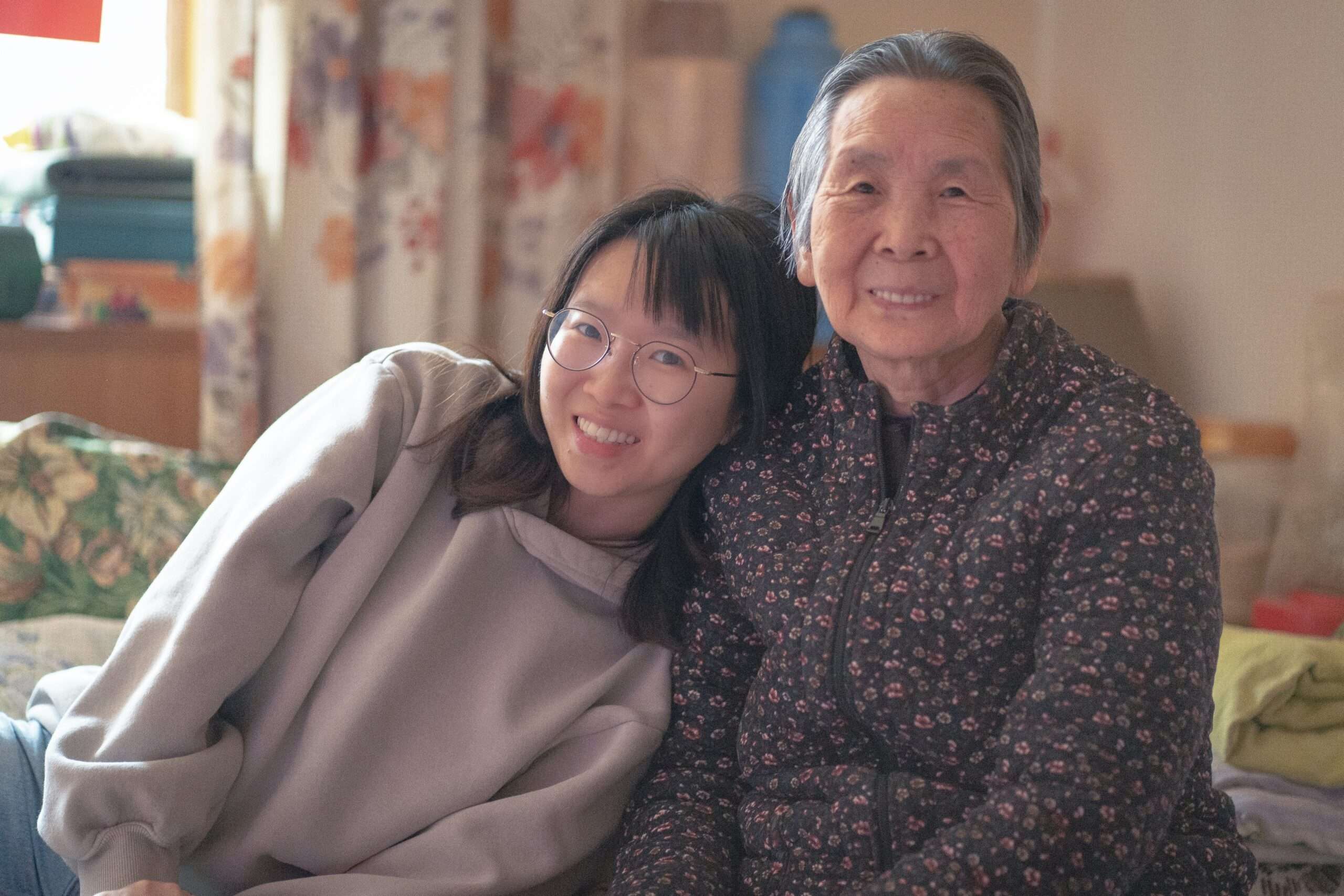
Photographer: cal gao

What’s happened, that we feed our children a single definition of success? Grow up and leave home, climb the ladder, buy a house, and live an “independent” life. At the same time, aging parents assert they must never become a burden on their grown children. These aspirations for self-reliance are ingrained in our concept of good living.

I wonder if we have it wrong…

Personal conviction, self-directed decisions, accomplishing goals on one’s own, these are all powerful elements of autonomy that come with the reward of feeling accomplished and satisfied.  Interdependence (beginning together and relying on others) is what keeps people healthy. We are a social species, and in social groups is how human beings are best suited to live.

In our modern ways of organizing ourselves in society, we have forgotten that multigenerational households were the norm for most of human history. It’s been a relatively recent development that we have measured success by dispersing the family into multiple homes, each behind its own closed door.

“Loneliness has become a public-health epidemic.”

The social experiment is not going well. Loneliness has become a public-health epidemic, increasing the risk of premature death at rates comparable to smoking and obesity!

Meanwhile, the housing data tell a striking story. While the buzz is loud about lack of housing, in fact, our communities are full of empty bedrooms. Literally millions of them, most in the homes of older adults living alone. At the same time, young people are struggling to find an affordable apartment, weighed down by debt, and postponing milestones like starting families because rent consumes too much of their income. We have a structural surplus of space and a structural deficit in seeing solutions.

What if the answer is not more construction, but more connection?

Small but powerful examples are showing the benefits. Home-share programs match seniors with university students. Cohousing developments arrange single older adults in private suites around shared kitchens and gardens. Some young people, groups of friends, are going in together on the purchase of a jointly owned first home. In these settings, researchers find better mental health, greater life satisfaction, and fewer emergency-room visits by older residents. Togetherness is good medicine.

As for the fear of being a burden, it deserves reconsideration. Studies show that adult children who help care for a parent often feel more purpose and emotional closeness, not resentment. Older adults living with family tend to stay healthier and independent longer. Ironically, the determination to avoid burdening anyone can lead to the very outcome people are trying to avoid.

More good news; there are environmental benefits. Multigenerational households use far less energy per person. Three generations under one roof leave a much smaller environmental footprint than three separate homes. Living together is climate friendly.

The biggest factor is economic. A large body of research has shown that one of the most significant determinants of health is economic status. Yes, studies on the health impacts of living alone, of single parent versus traditional family structures, or of communal living, offer insights. The research is clear that these factors are less important to health than the mighty dollar. So, if living together will improve financial wellbeing, then it’s an excellent investment in health.

Multigenerational living isn’t right for every family, but for many, it could be exactly the right antidote, to financial stress, and to today’s fractured social landscape. We would do well to create more well-designed cohabitation, with vetted roommates, seniors paired with students, and shared community spaces. As a result, we could expect stronger family ties, improved housing utilization, reduced loneliness, and better health.

This column offers opinions on health and wellness, not personal medical advice.  

Newsletter Signup

Stay in the loop with exclusive news, stories, and insights—delivered straight to your inbox. No fluff, just real content that matters. Sign up today!


Dr. W. Gifford-Jones, MD is a graduate of the University of Toronto and the Harvard Medical School. He trained in general surgery at Strong Memorial Hospital, University of Rochester, Montreal General Hospital, McGill University and in Gynecology at Harvard. His storied medical career began as a general practitioner, ship’s surgeon, and hotel doctor. For more than 40 years, he specialized in gynecology, devoting his practice to the formative issues of women’s health. In 1975, he launched his weekly medical column that has been published by national and local Canadian and U.S. newspapers. Today, the readership remains over seven million. His advice contains a solid dose of common sense and he never sits on the fence with controversial issues. He is the author of nine books including, “The Healthy Barmaid”, his autobiography “You’re Going To Do What?”, “What I Learned as a Medical Journalist”, and “90+ How I Got There!” Many years ago, he was successful in a fight to legalize heroin to help ease the pain of terminal cancer patients. His foundation at that time donated $500,000 to establish the Gifford-Jones Professorship in Pain Control and Palliative Care at the University of Toronto Medical School. At 93 years of age he rappelled from the top of Toronto’s City Hall (30 stories) to raise funds for children with a life-threatening disease through the Make-a-Wish Foundation.  Diana Gifford-Jones, the daughter of W. Gifford-Jones, MD, Diana has extensive global experience in health and healthcare policy.  Diana is Special Advisor with The Aga Khan University, which operates 2 quaternary care hospitals and numerous secondary hospitals, medical centres, pharmacies, and laboratories in South Asia and Africa.  She worked for ten years in the Human Development sectors at the World Bank, including health policy and economics, nutrition, and population health. For over a decade at The Conference Board of Canada, she managed four health-related executive networks, including the Roundtable on Socio-Economic Determinants of Health, the Centre for Chronic Disease Prevention and Management, the Canadian Centre for Environmental Health, and the Centre for Health System Design and Management. Her master’s degree in public policy at Harvard University’s Kennedy School of Government included coursework at Harvard Medical School.  She is also a graduate of Wellesley College.  She has extensive experience with Canadian universities, including at Carleton University, where she was the Executive Director of the Global Academy. She lived and worked in Japan for four years and speaks Japanese fluently. Diana has the designation as a certified Chartered Director from The Directors College, a joint venture of The Conference Board of Canada and McMaster University.  She has recently published a book on the natural health philosophy of W. Gifford-Jones, called No Nonsense Health – Naturally!

Click to comment

Leave a Reply

Your email address will not be published. Required fields are marked *

Trending

How using AI makes people think they’re smarter than they are

Junior Contributors

Canada’s decline is not the fault of Donald Trump

Politics

New research reveals urgent need for Caribbean community response to violence against women

Social Justice

Death of the spliff: Why Gen Z is ditching the joint for high-speed cannabis

Likes & Shares

Newsletter Signup

Stay in the loop with exclusive news, stories, and insights—delivered straight to your inbox. No fluff, just real content that matters. Sign up today!

Legal Disclaimer: The Toronto Caribbean Newspaper, its officers, and employees will not be held responsible for any loss, damages, or expenses resulting from advertisements, including, without limitation, claims or suits regarding liability, violation of privacy rights, copyright infringement, or plagiarism. Content Disclaimer: The statements, opinions, and viewpoints expressed by the writers are their own and do not necessarily reflect the opinions or views of Toronto Caribbean News Inc. Toronto Caribbean News Inc. assumes no responsibility or liability for claims, statements, opinions, or views, written or reported by its contributing writers, including product or service information that is advertised. Copyright © 2025 Toronto Caribbean News Inc.

Connect
Newsletter Signup

Stay in the loop with exclusive news, stories, and insights—delivered straight to your inbox. No fluff, just real content that matters. Sign up today!