

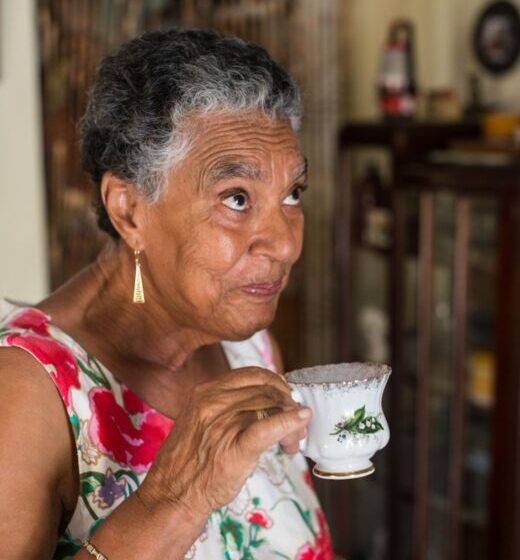

“Not a lot of people talking about it.” These are not the words of a researcher in a sterile lab, but the frustrated, urgent voice of a community member grappling with a crisis that is both deeply felt and dangerously overlooked. Beyond the headlines of acute health crises, a silent epidemic is unfolding within our communities, one that touches the lives of our most venerable members. The social isolation of our Caribbean seniors is a silent epidemic, significantly impacting seniors from nations like Jamaica, Trinidad and Tobago, and Barbados, who have shaped the cultural landscape of Toronto. There is a profound and necessary truth that we should begin to speak of, loudly and clearly…
Social isolation and loneliness are significant, growing public health crises among older adults, with roughly 1 in 4 experiencing them, leading to major physical and mental health risks. Social isolation and loneliness are linked to substantially higher mortality risk, increasing the likelihood of premature death by roughly 25%. The health impact is comparable to smoking up to 15 cigarettes per day. Limited social connection has been also associated with elevated risk of cardiovascular disease, stroke, anxiety, depression, dementia, and greater vulnerability to viral and respiratory infections. The experience of loneliness is a deeply personal experience, but data continues to reveal a troubling pattern. For example, in Trinidad, 33% of older adults (aged 65+) reported feelings of loneliness, in comparison, to the global prevalence estimates that show 27.6–31.2% for social isolation and loneliness combined.
For Caribbean seniors, both in their home countries and within the diaspora, isolation presents a unique and complex set of challenges with disconnection from the roots of their identity. Seniors are the respected centre of an intergenerational family, the keepers of stories, the anchors of tradition, and the living libraries of our heritage. Their experiences of social isolation represent a personal tragedy, and a tear in the communal fabric, which severely severs the lines of knowledge and belonging that define who we are. As one community member lamented, “We’re so isolated if we don’t meet our own people.”
For many Caribbean seniors who have made Canada their home, the dream of aging in place is fraught with distinct obstacles. They are at a greater risk of isolation, due to: migration patterns that stretch families across oceans, economic precarity that limits social engagement, and a healthcare system that often fails to see or understand the cultural nuances of Black and diaspora health. Social isolation manifests differently, often masked by a stoic resilience: a quiet withdrawal, a missed phone call, a story left untold.

In the challenge lies an opportunity for reconnection and community-building with an immense need for culturally appropriate programming for our seniors. Mainstream seniors’ programs often fail to provide the sense of belonging that is so crucial; they may offer a seat at the table, but not the familiar rhythms of dominoes, the shared language of a hymn, or the taste of a meal that feels like home. This is the gap that community-led organizations are desperately trying to fill, like
The Jamaican Canadian Association (JCA), a pillar since the 1970s, offers its Caribbean Canadian Seniors program, a vibrant hub of activity from fitness and devotionals to a choir and dominoes club, creating a space that feels like family. In the Peel Region, Ubuntu Legacy Community Care operates on the principle of “I am because we are,” providing culturally grounded health and wellness outreach. Tropicana Community Services, born from Jamaican leadership in 1980, has served the Scarborough community for over four decades, while the Blackhurst Cultural Centre’s “Shake Up Your Life” program offers a weekly space to simply meet and be in community.
These organizations are doing the necessary work, but they cannot do it alone. Breaking the silence around this issue is the first, most critical step, requiring that we move beyond anecdotal evidence and demand the data and documentation that will make this crisis impossible for policymakers to ignore. Also, a collective commitment is needed to invest in and uplift the community-led solutions that are already proving their worth. Further, it calls for policies that invest in community-based support systems and address the systemic inequities that leave many seniors vulnerable.
Most importantly, it requires a fundamental rethinking of our own roles, with each of us to look within our own families and communities, to extend a hand, and to recognize that our own well-being is intrinsically linked to the well-being of those who came before us. Our social connections are a form of wealth, a vital resource that we should cultivate and protect for a healthier, more connected future for all generations.
To the generations who have followed in the footsteps of these pioneering elders, the call is to reconnect. It is a call to pick up the phone, to sit and listen, to ask the questions you have not yet asked. To our seniors, who may feel unseen and unheard, we say, “Thank you.” Thank you for your strength, your sacrifice, and the legacy you have built. Your reconnection is not a burden; it is our privilege, our responsibility, and the most necessary work of all.
Contributor Note
Ika Washington is a community health specialist, a critical health sociologist, a member of the Caribbean diaspora, and a health and social development consultant with expertise in socioeconomic determinants of health, public policy, and regional development in the Caribbean.
Stay in the loop with exclusive news, stories, and insights—delivered straight to your inbox. No fluff, just real content that matters. Sign up today!