


Walking into a room in Toronto where the air is thick with the scent of burnt scallion butter and tamarind glaze, you are stepping into a strategic reclamation of identity. As a storyteller, I look at a plate and ask, “What is being softened for us, and what is being amplified?” When we speak of Antigua and Barbuda, the colonial narrative often traps the islands in a frame of resorts and beaches, but the soul of these twin islands is found in the bread shop.
In Antigua, you go to a bread shop, often in the early, quiet hours of Sunday morning, to claim woodbread pulled from ovens that have stayed hot for over a century. This is the Antiguan and Barbudan woodbread, a staple served with a healthy dose of butter, tin cheese, and cured meats. To eat this is to participate in a ritual of community that predates the modern tourist gaze.
The story deepens as we decode the plate further. Consider the Katayaf pancake topped with saltfish. On the surface, it’s a delicious fusion. Beneath that, it is a psychological map of a diverse population where 30% of the people were born outside the country. The pancake pays homage to the Syrian and Lebanese families who have called the islands home since the 1950s, while the saltfish (traditionally preserved cod) bridges the Caribbean to the Canadian Maritimes. This is a living history of survival and harmony, proving that identity lives far beyond the confines of a gated resort.
Our cultural ambassadors, like Shelley Challenger of Villa Coby, remind us that the experience is personal. Her villa, born from her father’s dream to bring his Jamaican wife to retire in Antigua, represents barefoot elegance, a place where you dine under the stars with a private chef. It’s about the people you meet, like the chefs who understand that nature’s lawnmowers (the goats roaming the island) are a source of both sustenance and humor (remember: tail up for goats, tail down for sheep).

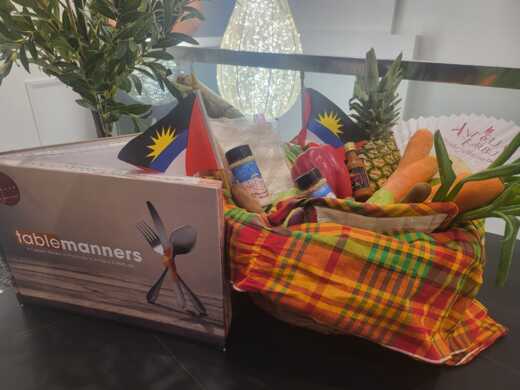
The upcoming Antigua and Barbuda Culinary Month in May 2026 is your entry point to this interrogation of flavour. With headliners like Andi Oliver, Nina Compton, and Toronto’s own Devan Rajkumar and Suzanne Barr, the event is a regional symposium of excellence. You will see the Antigua Black Pineapple, a national fruit so rare and sweet it takes 18 months to grow and rarely survives the journey off-island, meaning you have to be there to truly know it. You will learn why the famous spiny lobster is off-limits from May to June, a radical act of conservation to ensure the species sustains for generations.
We fall in love with people, not just places. We fall in love with the chef who mimics the national dish, fungee, using plantains to tell a story of African heritage. We fall in love with the tamaran growing wild in backyards.
The Caribbean is a teacher. This May, I challenge you to move beyond the sand. Go to the FAB (Food, Art & Beverage) Fest. Engage with the Caribbean Food Forum. Experience the “Eat Like a Local” campaign. Don’t just visit Antigua and Barbuda; allow it to change how you see the world, one plate at a time.
Stay in the loop with exclusive news, stories, and insights—delivered straight to your inbox. No fluff, just real content that matters. Sign up today!