

Imagine a young student in a classroom in Kingston or a grassroots organizer in Port of Spain. They are looking for the hard numbers to prove their nation’s worth to an international investor or to challenge a predatory loan. For over sixty years, they had a gold standard to turn to: the CIA World Factbook, but as of February 4th, 2026, that digital library has been bolted shut.
The Central Intelligence Agency recently announced that it is shuttering its popular reference manual after more than six decades of service. What began in 1962 as a classified tool for Cold War spies eventually became a public-domain lifeline for journalists, educators, and anyone trying to navigate the complexities of global economies and societies. Now, the agency has removed the official online version from its website, offering no substantive explanation for the decision.
To some, this might look like a mere administrative budget cut. Behind the scenes, we are told it is a strategic shift to end programs that don’t advance core missions. As someone who studies the intersection of power, psychology, and social justice, I see a deeper, more troubling narrative. We must ask, why should we care?
For African-Caribbean communities and the Global South, information has always been a battleground. Power is the ability to define reality. For years, the Factbook functioned as an unofficial baseline for country facts, shaping how the world described our resources and our militaries. While the data was gathered through an imperial lens, it provided a free, accessible platform that gave smaller nations a seat at the statistical table.

When a public resource like this disappears, it creates an information vacuum. Who fills it? Likely private corporations or data brokers who will sell our own statistics back to us at a premium. When public data is removed without explanation, it limits the public’s ability to engage in informed dissent. We are being moved from a world of transparent (albeit curated) data to one of data darkness.
This decision raises critical questions that every equity-focused leader should be asking. If the CIA no longer deems the public reporting of global data as core to its mission, what has replaced it? Who benefits when the world’s most powerful intelligence agency hides its homework?
For smaller nations, the implications are psychological and political. When we are no longer on the map of a primary global reference tool, we become easier to overlook, easier to exploit, and easier to misrepresent. By removing the public baseline, those in power gain the flexibility to change the narrative of a nation’s health or stability whenever it suits their strategic needs.
We cannot afford to be passive consumers of this silence. While historical versions of the Factbook will live on in archives and mirror sites due to its public-domain status, the live pulse of global data has been severed. We must become our own cartographers. We must invest in our own data institutions and demand transparency from the global powers that watch us.
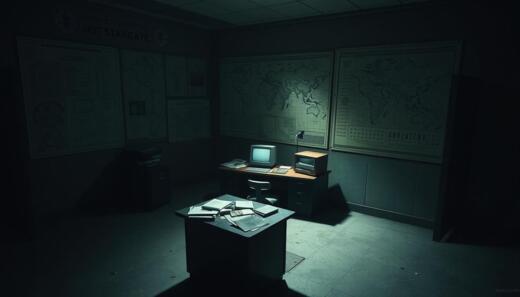
In a world where information is the ultimate currency, the closure of the World Factbook is a signal. The curtain is closing, and it is time for us to start looking at what is happening in the shadows. Knowledge is power, but only if we have the courage to ask why it’s being taken away.
Stay in the loop with exclusive news, stories, and insights—delivered straight to your inbox. No fluff, just real content that matters. Sign up today!