


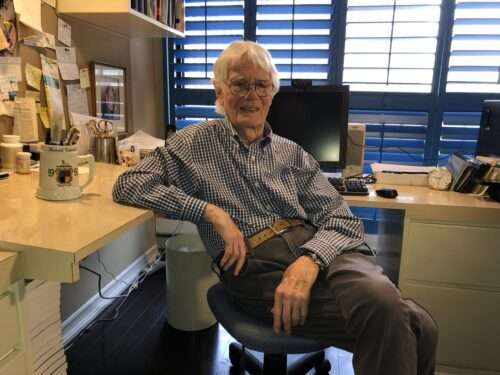

I have been lucky as my parents aged past 90. My father, Dr. W. Gifford-Jones, stayed vibrant longer than most people dare hope. In his nineties he was still hopping on planes, giving talks across Canada, researching and writing his next column, and scheming about the next promotion, or the next stunt that would amuse him – like rappelling down Toronto’s 35-storey City Hall to raise money for the Make-a-Wish Foundation. He relished a challenge. Growing old, for him, didn’t mean slowing down. It meant a development of new priorities.
He was well past 95 when I offered to help with the computer work involved in distributing his weekly column to editors. He suffered too much frustration from IT. I should have helped sooner. Once I did, I grew closer not just to the logistics of his writing, but to the writing itself. Wouldn’t it be fun, I proposed, to write together?
He agreed and the collaboration took off. We talked through ideas, shaped arguments, laughed (and feuded) over opposing ways of seeing the same thing. It was an era of our long relationship I will forever hold precious.
As the youngest of his children, born when he was 44, I was still relatively youthful as he extended his extraordinary longevity. I had a lot of energy to give, but not everyone’s story looks like this. In many cases, people find themselves in their seventies caring for parents in their nineties, pushing eighty supporting centenarians. A close look at what is happening in those situations reveals scenes that are anything but easy. Not everyone ages as healthily as my father did. Most elderly seniors are wrestling with chronic diseases. Add dementia into the mix and the loving commitment to care shifts to an exhausting, sometimes heartbreaking, endurance test.

The problems are varied: refusing to eat; resisting walkers, or other safety supports; forgetting medications; making unsafe decisions; losing the ability to manage finances, or medical appointments; neglecting property or household tasks. There are those who get very angry and sometimes violent. These issues often begin quietly and seem manageable – especially to children who are themselves aging and determined to respect their parent’s independence. Over time, the strain mounts. The risks mount, and the emotional toll mounts.
What would my father advise? He was never hesitant to speak plainly. When writing, he would use a quote, as from Will Rogers, who said, “Good judgment comes from experience, and a lot of that comes from bad judgment.” My father would say, “Don’t kid yourself. No one gets it perfect, but don’t make foolish mistakes.” He would remind people that caring for aging parents requires equal measures of compassion and practicality. He would urge families to plan early, before a crisis, and to involve physicians, trusted friends, and community support. He would insist that safety is not a betrayal of dignity, and he would encourage caregivers to look after their own well-being too, because no one can pour from an empty cup.
Now it’s my turn to offer counsel. I can speak to the matter of love, and I can attest that it doesn’t always look like those old greeting cards. Sometimes love is repetitive, tiring, and unglamorous work. Sometimes it is stepping in sooner than you expected. Sometimes it is saying “no” to someone who once taught you to say “yes.” It is still love, and if my father taught me anything, it’s that the hardest work we do for the people we love often becomes, in time, the work we treasure most.
This column offers opinions on health and wellness, not personal medical advice.
Stay in the loop with exclusive news, stories, and insights—delivered straight to your inbox. No fluff, just real content that matters. Sign up today!