


Editor’s Note: This article carries the voice of a previous season, but the wisdom is evergreen. Our community is still navigating these realities, still rising through them. Let this be both reflection and fuel.
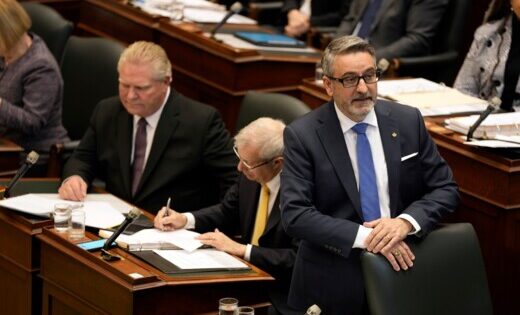
It would be dishonest to pretend that things feel calm right now. The world carries a low, constant hum of disorder. Politics has become a theatre of outrage and incompetence, where real leadership is rare and posturing is plentiful. Empires still behave like empires and governments spend money as if limits no longer exist as they quietly try to shift the cost onto the next generation. Culturally, we are watching ideas once considered unthinkable pushed aggressively into schools, homes, not even sparing the bodies of children, all while good people are told to stay quiet and trust the process.
One of the most consequential shifts of the last century was not economic, or technological, but spiritual and cultural. For a lot of recorded human history, there was an understood order to how societies functioned. Faith shaped culture and culture shaped politics. Meaning and purpose flowed downward into institutions, not the other way around. The past was not always a utopia, that is very true, but when things were functional, that was the principle that worked.
That order quietly reversed in the twentieth century, particularly in the post–WWII era. Government began to present itself as the great problem-solver and politics became the primary tool for moral repair, or so they said. It was easier to subcontract out the social responsibilities of faith communities to the government by raising taxes and letting the bureaucracy manage things like food insecurity and child, elder, and health care. Culture became something to be managed, and faith was gently, but firmly pushed aside, welcome to exist, as long as it stayed private and powerless.
Most people of faith, often with sincere intentions, absorbed this inversion. We became adept at believing that the right policy, the right funding model, or the right election outcome could repair what was, at its core, a human and spiritual fracture. Responsibility drifted upward and personal agency thinned out. We should not be surprised that disappointment and disillusion have followed.
What we tend to forget is that something fundamental can never be taken from us. Each of us still possesses a form of influence that cannot be regulated, taxed, censored, or neutralized. The ability to improve the world immediately around us, not in sweeping gestures, but through ordinary, human faithfulness.
This was brought home to me in a simple and unexpected way this past Christmas Eve as we continued a household tradition we started some years back. I spent hours driving along the rural roads around our home and in our nearby town, stopping at homes, knocking on doors, and handing out cookie tins with my daughter. There was no message to deliver and no point to prove besides peace and goodwill to those who live nearby. Just a smile, a greeting, and a moment of connection.

Some people were caught off guard, some were hesitant, and most were genuinely friendly. A few almost certainly disagree with me on politics, faith, and probably many things of consequence to my family. For that moment, none of that mattered. What mattered was that someone showed up, unprompted, simply because they cared. If even one person felt a little less invisible that Christmas eve, it was worth it.
We spend an enormous amount of time talking about how culture is broken, as though it were some distant system operating independently of us. Culture is simply the sum of how people treat one another in ordinary, unobserved moments. It is shaped quietly, daily, by small decisions that never make the news and rarely earn recognition. Long before laws are written, or repealed, culture is already being formed in kitchens, driveways, grocery store aisles, offices, and machine shops.
This is why so many political arguments feel exhausting and hollow. We argue passionately about downstream outcomes while neglecting the upstream work that gives politics its moral shape and limits. When faith weakens, culture thins and frays. When culture thins, politics grows aggressive and overreaches to fill the void. This order matters, whether we acknowledge it or not.
Will impacting one person positively change everything overnight? Of course not. Expecting instant results is part of what has made so many people cynical and fatigued in the first place. Good does not need to be fast to be effective. Doing good has a compounding effect. It accumulates quietly, building trust where none existed before and softening hearts that no argument could ever reach. Over time, slowly, imperfectly, and often unnoticed by popular culture and media, it reshapes the culture around it. When culture shifts, politics and government will follow, usually reluctantly and almost always too late to take the credit, though they might try.
So yes, the world feels unsettled. Power is misused. Institutions wobble, and the noise never seems to stop, but the path forward has not been closed, and it has not been taken from us.
Anchor your faith and invest in the people around you. Let politics catch up when it’s forced to react. Start with one person that you can influence and impact positively, because that’s how real, lasting change has always happened,
Stay in the loop with exclusive news, stories, and insights—delivered straight to your inbox. No fluff, just real content that matters. Sign up today!