

In the Afro and Indo-Caribbean communities, we are taught to “tough it out,” to pray it away, and to work through the pain, but what happens when the very system designed to preserve our lives treats us as if we don’t exist? We are currently witnessing the rise of the “Ghost Patient” phenomenon, a crisis of invisibility that is haunting Ontario’s healthcare halls and disproportionately claiming the spirits of our people.
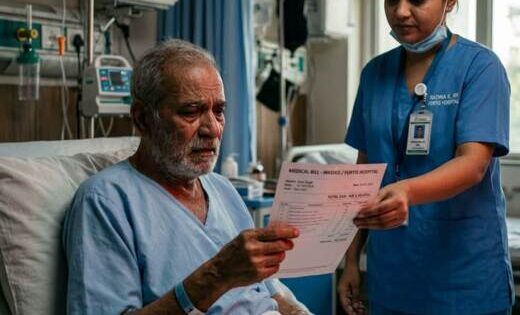
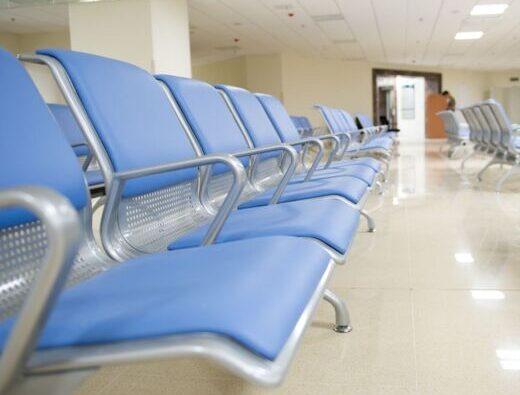
There are many of us reading this who have been there; you have walked into a crowded, chaotic emergency room (ER), looked at the sea of suffering, and walked right back out before you are even registered. You are now invisible to official clinical data. While the provincial government touts a “left without being seen” (LWBS) rate of about 4.9%, the reality on the ground is far more terrifying. A staggering 21% of Canadians reported leaving the ER without care in the last year.
For the Afro/Indo-Caribbean community, this is not just a statistical gap. We are already navigation-weary in a system where medical bias often minimizes our pain. When we finally decide that a situation is dire enough to seek help, we find ourselves in ERs that feel like warehouses for the forgotten. Our youth, aged 18-34, are hitting the breaking point fastest, with 29% walking away from care because they simply cannot afford to lose hours in a lobby that offers no hope of a doctor’s touch.

Why should those who have never thought about this care? Well, invisibility is infectious. If the system can ignore an African Caribbean mother, or an Indo-Caribbean elder who leaves an ER in silence, it can eventually ignore you. These ghosts are often dealing with urgent issues that risk rapid deterioration, or even death if left untreated. When people walk away, their mortality odds increase. We are effectively allowing a silent cull of our most vulnerable citizens.
What we are missing is the recognition that the ER is the new primary care clinic because our frontline defenses have collapsed. Ontario is facing a catastrophic shortage of family doctors, with a projected 4.4 million residents without primary care by 2026. Without a family doctor who looks like us and understands our cultural history, our community defaults to the ER for infections, chronic pain, and mental health crises. There, we are met by a quota system, a government that caps medical school admissions at 3,000 spots and leaves international medical graduates (IMGs) in a perpetual state of limbo while our people suffer.
Our government’s inaction is a choice. They have allowed public confidence to crater, with 66% of us expecting the quality of healthcare to decline further. They have prioritized digital metrics over human pulses. We need an immediate expansion of medical school seats and a fast-track for qualified IMGs who are currently driving Ubers instead of saving lives.
As a community, we must stop being the silent sufferers. We must demand front-end tracking so that our presence is acknowledged the moment we step through those hospital doors. We must advocate for our neighbours and our youth, ensuring that when they feel the system ghosting them, we are there to pull them back and demand they be seen.
We cannot build a future on the backs of ghosts. It is time to step out of the shadows and demand a system that counts us, cares for us, and finally, truly sees us.
Stay in the loop with exclusive news, stories, and insights—delivered straight to your inbox. No fluff, just real content that matters. Sign up today!