


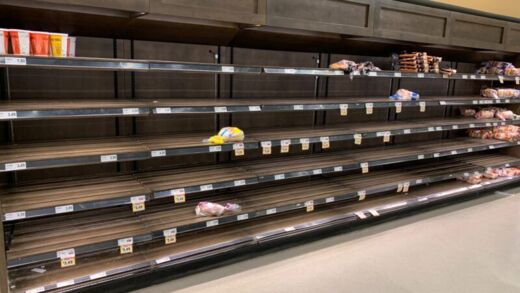

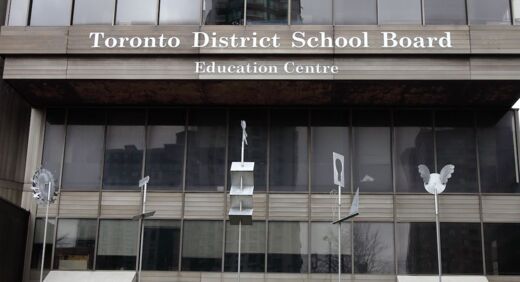
The Toronto City Council has approved a plan to build four new grocery stores in Toronto, which would be operated by the city and designed with affordability in mind, according to the city.
This pilot project would require one grocery store to be located within each of the city’s Community Council districts, with priority given to marginalized neighbourhoods with limited access to full-service grocery stores.
The goal would be to establish a not-for-profit model that offers residents affordable food pricing. These municipal stores would have access to financial funding to reduce operating costs, including potential waivers of property taxes, development charges, and other applicable fees.
Is this a new idea? If not, let us have a look at where this has been done already, and was this a success or not? Sun Fresh Market in Kansas City, Missouri, is one such project. Kansas City residents shared several complaints about the store, which opened in 2018, from shelves being almost bare, a disgusting smell emanating from the store to people leaving right after entering. In 2024, KC Sun Fresh lost $885,000 and currently only retains about 4,000 shoppers weekly, down from 14,000 a few years ago.
Speaking of taxpayer funding, exactly how much went into Sun Fresh? $13 million was the starting price for developing the corner of Linwood and Prospect, which includes a Sun Fresh grocery store as its anchor store. Total cost, including yearly infusion into Sun Fresh grocery, is 29 million dollars. Yet it has failed. Due to these factors, the government-run and funded Grocery outlet (Sun Fresh Market) closed in August 2025.
Before all these issues came to light at Sun Fresh, Councilman Jermaine Reed had this to say: “Every community deserves a full-service grocery store, and we worked hard over the past several years to make sure that this happens.”
There are many more cases of this type of state-run failures from Birmingham to Baltimore. New York City Mayor Zohran Mamdani wants New York to have government-owned grocery stores. Past government-backed grocery stores have struggled to deliver, yet politicians are still proposing this as the answer to high grocery bills. Chicago Mayor Brandon Johnson also has the same idea to open city-owned and city-managed grocery stores. Johnson proposed opening such grocery stores in response to the closing of many supermarkets in poor areas of the city and commissioned a study to examine the question. The results of that study have not been made public, and Mayor Johnson has backed off his plan.
The state of Illinois established a grocery initiative to provide municipalities with up to $2.4 million to open grocery stores. To date, Chicago has not applied for any of this money.

Why is this being done?
“He who controls the food controls the people.”
Control comes to mind. He who controls the food controls the people. If this becomes a reality countrywide, it can be used as a submission tool against the citizens, with no compliance, no food. The big question here is Why now?
It’s easy to come up with the idea of municipal grocery stores in a healthy economy, but it comes at a cost to taxpayers. The bigger the state-run program becomes, the smaller the value-producing economy becomes. That is when you will find out what Margaret Thatcher meant when she said, “The problem with socialism is that you eventually run out of other people’s money.” We need to understand that Private businesses can run out of money, but governments can tax their way out.
In places like the Soviet Union, there was no public money to keep dipping into, but in places like Canada, there are enough private businesses to bleed taxes out of to keep inefficient operations afloat.
It is worth noting that since politicians and bureaucrats are not personally responsible for the losses created by their policies, they have no incentive to ensure stores operate at reasonable prices.
Also, if all the food at grocery stores were given away for free, there would be an obvious problem. The shelves would clear out, and there would be no incentive to restock them.
Here are some tips from Steven Suarez, a financial expert, and author:
- Mismanagement: Nonprofits or government entities often lack the expertise to run complex operations like grocery stores, which require precise inventory control and supplier relationships.
- Political priorities: These projects can become tools for political gain, prioritizing optics over operational success.
- Ignoring market dynamics: Private grocers avoid certain areas for reasons: high crime, low profit margins, that public projects rarely address.
- Funding pitfalls: Public money comes with strings, often leading to bloated budgets or misallocated resources.
We need to ask ourselves why these politicians are suddenly trying to implement things that have not worked. Who deliberately did things to cause these price hikes in the cost of food? Who is now posing as the saviours of the people?
Why are they deliberately depleting their country of its hard-earned tax dollars? When regular groceries go out of business because they can’t compete, and the government-run groceries fail, what is next? Starvation? Is this the government’s way of weaponizing food against the citizens?
Who did these government officials consult with before deciding to push these ideas on the citizens? This certainly cannot be in the interests of the citizens.
Stay in the loop with exclusive news, stories, and insights—delivered straight to your inbox. No fluff, just real content that matters. Sign up today!









steven kaszab
April 25, 2026 at 6:40 am
Publicly Owned Stores (retail/Grocery) can be profitable. The idea is to put that profit back to work for the public interest. Run them as a business person would except place the profits in the publics hands and not the hands of private profiteers