



The Ontario government’s April 13th, 2026, announcement signals a significant shift in school board governance, one framed as accountability, but received by critics as political overreach.
In a press release titled “Ontario Introduces Legislation to Hold School Boards Accountable and Support Student Achievement,” the province outlined proposed reforms under the Putting Student Achievement First Act, 2026. The government says the changes will strengthen school board oversight and accountability and deliver more consistent learning experiences aligned with future job markets.
At the center of the announcement is Paul Calandra, who emphasized a return to fundamentals: “Ontario’s education system must remain on its core responsibility: student success.” He added that in some boards, “That focus has been lost and students are paying the price.”
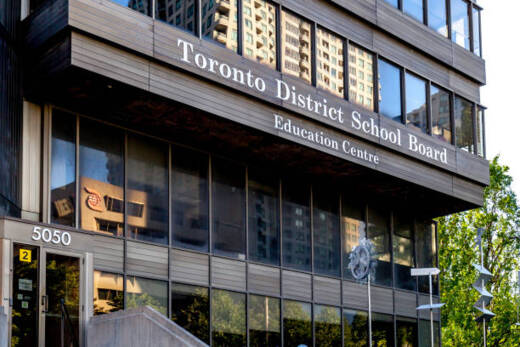
The legislation proposes tighter financial controls, including a $10,000 cap on trustee discretionary spending, aimed at curbing what the province describes as wasteful expenses, such as electronics, travel, and conference costs. It also introduces governance reforms that would reduce the number of trustees at the Toronto District School Board (TDSB) from 22 to 12, while leaving other public, Catholic, and French-language boards untouched.
That uneven application raises a central question the government does not fully answer: why target only one board?
The province frames these measures under five pillars: strengthening governance, improving leadership, tightening budget oversight, enhancing capital project delivery, and improving communications. However, the most contentious proposal lies in leadership restructuring. The legislation signals a shift toward appointing individuals with business expertise to leadership roles, potentially sidelining experienced educators.

Critics argue that this move misunderstands the nature of education governance.
The Elementary Teachers’ Federation of Ontario (ETFO), representing 84,000 educators, issued a sharp rebuke the same day. It called the legislation an unnecessary restructuring that undermines trustees and interferes with collective bargaining.
ETFO President David Mastin stated, “While the Ford government ultimately rejected Minister Calandra’s initial plan to eliminate all democratically elected trustees, this legislation removes the essential powers trustees need to genuinely represent families and students.”
Mastin’s statement points to an earlier, more drastic proposal (since abandoned) to eliminate trustees altogether. That reversal, he argues, came only after sustained advocacy. Still, he warns the current plan weakens democratic oversight in subtler ways.
The selective reduction of trustees at the TDSB intensifies those concerns. As one of 31 English public boards, its singular treatment suggests a political calculus rather than a system-wide reform strategy. Mastin goes further, calling it “Another example of Premier Ford’s unhealthy obsession with Toronto,” a claim that underscores the growing perception of regional targeting.
From a policy standpoint, the government’s emphasis on fiscal discipline and standardized outcomes aligns with broader accountability trends in public administration. Education governance is not purely managerial; trustees serve as elected representatives of local communities and reducing their number or authority risks weakening that link.
The legislation’s language, focused on efficiency, consistency, and workforce readiness, signals a shift toward a more centralized, outcomes-driven model. Whether that improves student achievement remains an open question.
What is clear is that the proposal reframes who gets to make decisions in public education, and on whose terms.
Stay in the loop with exclusive news, stories, and insights—delivered straight to your inbox. No fluff, just real content that matters. Sign up today!