
As the United States moves from Juneteenth toward Independence Day, and closer still to the 250th anniversary of the Declaration of Independence, something deeper than celebration is unfolding.
Across the country, thousands are preparing to gather on June 27. From Washington, D.C. to New York, Philadelphia to Florida, and over 50 additional communities nationwide, a coordinated wave of mobilizations is taking shape, rooted in a simple but radical premise: democracy must be lived, not performed.
At the center of this national moment is the flagship gathering in Washington, D.C., where between 3,000 and 5,000 people are expected to converge in McPherson Square. The day will not follow the traditional script of protest alone. It will move through music, art, storytelling, youth activations, and cultural expression, before culminating in a march through Black Lives Matter Plaza and past the White House.
This is choreography with intention.
Organized through a broad coalition, including All of U.S. 250, Next 250, Get Free, the 50501 movement, and dozens of civic, labour, faith, immigrant rights, and racial justice organizations, these mobilizations are strategic. A coordinated response to what many organizers describe as an increasingly narrow, exclusionary narrative shaping America’s 250th anniversary.
That narrative, they argue, is being defined by power: who controls the story, who gets erased from it, and who is asked to celebrate without acknowledgment of harm.
June 27 interrupts that.
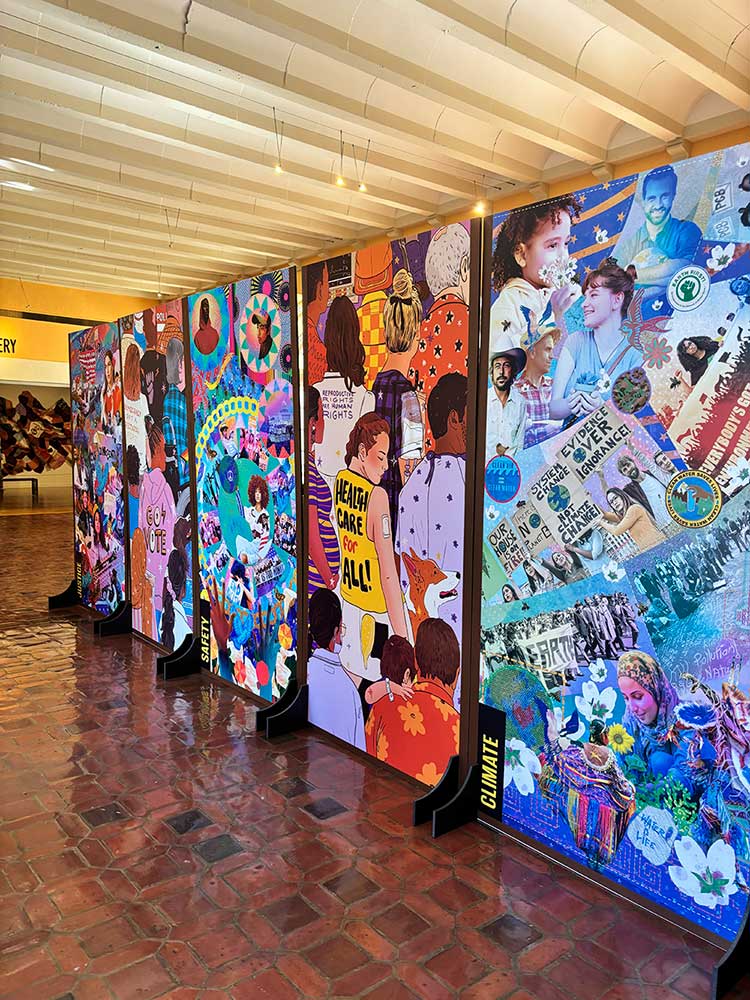
It offers an alternative: a multiracial, intergenerational, participatory vision of America grounded in interdependence. A “Declaration of Interdependence,” as organizers frame it. Its demands are clear: Living wages. Climate justice. Reproductive rights. Voting rights. Gun safety. Peace.

Beneath the policy language isa demand for dignity, belonging, and recognition. This is where the tension sharpens, because while official celebrations move forward (some backed by corporate sponsorships and political influence) artists are pulling out, communities are pushing back, and pressure is mounting on institutions seen as complicit in what critics call a “whitewashed” national story.
So, the question becomes unavoidable: who is America’s 250th anniversary really for? Through bodies in motion. Through public space reclaimed. Through stories told by those historically pushed to the margins, and through the presence of people who refuse to be written out of the nation’s past, present, or future.
There will be banners that read “Equality Over Erasure.” Installations that reimagine the Constitution. Youth voices speaking truths that policy often avoids. Families gathering in spaces that hold both pain and possibility.
This is unity forged through truth, and that distinction matters, because nations are sustained through participation,through who shows up, who speaks, and who is heard.
On June 27, across cities and communities, Americans are not waiting to be included in the story.
They are writing it themselves.
Stay in the loop with exclusive news, stories, and insights—delivered straight to your inbox. No fluff, just real content that matters. Sign up today!