


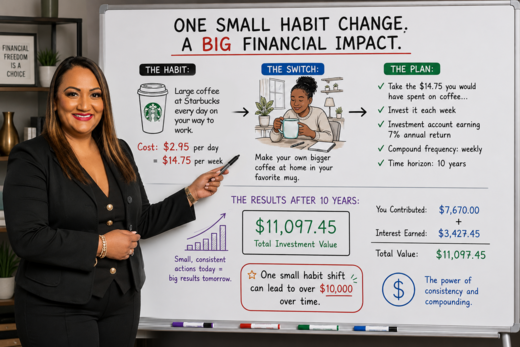

A woman recently told me she could not understand why she still felt financially stuck. She worked hard, earned a good income, and rarely made major purchases, yet somehow there was very little left at the end of each month.
When we reviewed her spending, the issue was not one major expense. It was the small, repeated expenses like subscriptions, takeout, impulse purchases, and everyday convenience spending. These are what I often refer to as silent leaks.
Silent leaks are the everyday expenses and emotional spending patterns that quietly chip away at financial progress over time. In isolation, these decisions can feel harmless. Long term, however, they begin to add up in meaningful ways.
One of the reasons silent leaks are difficult to recognize is because they often become normalized. Many people are moving quickly through life, balancing responsibilities, work, family, and rising costs. Convenience becomes important and habits become automatic. Spending patterns develop quietly through repetition, often without a clear understanding of how much money is leaving each month.
Many people feel pressure to keep up, contribute, attend, buy, upgrade, or participate in ways that stretch beyond what feels comfortable financially. These choices are rarely made from irresponsibility, they are often connected to emotion, identity, or the desire to create meaningful experiences for the people we care about.
At the same time, emotional spending has become deeply woven into everyday life. Ordering take out can feel easier than slowing down to plan. Small online purchases can provide temporary excitement or comfort in the moment. These habits develop gradually and often continue without much reflection because each individual expense feels manageable on its own.
Over time, however, silent leaks begin to compete with larger financial goals. Money that could be directed toward savings, debt reduction, investments, or long-term stability slowly gets absorbed into patterns that offer short-term convenience or emotional relief. The challenge here is the lack of awareness surrounding where money is consistently going.
When people begin reviewing their accounts carefully, they are often surprised by what they find. Subscriptions that are no longer being used, automatic renewals that have gone unnoticed or frequent purchases that seemed insignificant in the moment. Small leaks repeated consistently can create a larger impact than many realize.

Bringing awareness to these patterns does not require shame or extreme restriction. Financial progress is rarely built through deprivation; it is built through intention. Small adjustments made consistently over time often create far more stability than dramatic short-term changes that cannot be maintained.
It can start with simple steps:
- Review monthly bank and credit card statements carefully.
- Identify recurring charges that no longer serve a purpose.
- Pause before impulse purchases and give yourself time to decide intentionally.
- Create spending categories that reflect your actual priorities and values.
- Notice emotional triggers that influence spending patterns during stressful or overwhelming periods.
- Build small financial habits that create consistency.
These shifts may seem minor at first, but over time they begin to create more control, awareness, and more direction around money. As leaks are reduced, space begins to open for stronger financial decisions and longer-term goals.
This is often where people begin to experience a different relationship with money. Greater awareness creates greater choice and spending becomes more intentional. Financial decisions begin to align more closely with future goals instead of temporary emotions or outside pressure.
As those patterns begin to shift, another important conversation naturally follows. While some forms of debt can quietly create stress and instability, other forms of debt can be used strategically to build opportunities, assets, and long-term growth.
In the next article, we’ll explore the difference between debt that supports your future and debt that slowly works against it.
Stay in the loop with exclusive news, stories, and insights—delivered straight to your inbox. No fluff, just real content that matters. Sign up today!