Connect with us

Subscribe

Subscribe

Health & Wellness

The strange power of fake pills

“The art of medicine consists of amusing the patient while nature cures the disease.”

I have been sorting through unpublished Gifford-Jones columns. Among them, I found a dusty clipping from a Reader’s Digest article by Robert A. Siegel and a rough draft of this week’s column. In it, we find a glimpse into a lecture hall at Harvard Medical School 75 years ago, and the teachings of Dr. Henry Beecher, the Harvard anesthetist who challenged the medical establishment’s views about truth and healing.

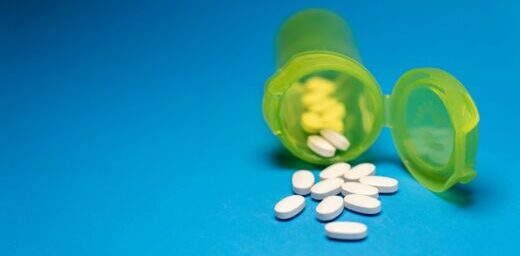
Beecher had stunned his class of medical students when he asked, “Is it ethical for doctors to prescribe a dummy pill – a pill that does no harm, never causes addiction, and yet often cures the patient?” He was speaking of a placebo. The lecture shocked his students who had been taught that honesty was an unshakeable tenet of medical ethics. Yet, Beecher showed that sometimes, deception can be powerful medicine.

Siegel’s Reader’s Digest story echoed this point. He described meeting Dr. John Kelley, a psychology professor at Endicott College who studies the placebo effect at Harvard. Curious, Siegel asked whether a “phony pill” might help him overcome his chronic writer’s block, insomnia, and panic attacks. Kelley obliged with a prescription: 100 gold capsules (Siegel’s favourite colour) costing $405. Each one contained nothing but cellulose, and yet, Siegel found that the more expensive they seemed, the better they worked. The gold capsules helped him focus and stay calm. Even when drowsy, another capsule kept him writing.

“Is it ethical for doctors to prescribe a dummy pill?”

Beecher published his groundbreaking paper “The Powerful Placebo” in 1955. He argued that all new drugs should be tested in double-blind trials so neither doctor nor patient knows who receives the real drug.  The results were unsettling. Hundreds of supposedly effective drugs were found to be little more than expensive illusions. Many were pulled from the market.

Placebo therapy itself is ancient, and there is proof that belief predates biochemistry. In the medical lore, we are told doctors once prescribed crocodile dung, or powdered donkey hoof, and sometimes they worked! Later, physicians injected sterile water to relieve pain, and to their surprise, many patients improved.

One study in 1959 found that when surgeons tied off an artery to increase blood supply as a treatment for angina, some patients reported relief. When surgeons merely made a skin incision and did nothing else, the results were just as good. Ethics boards today would never allow such sham surgeries, yet they taught medicine an unforgettable lesson. The mind can profoundly influence the body.

Even more astonishing was later research at Queen’s University in Kingston, Ontario. Placebo pills improved urinary flow in men with enlarged prostates. Some of these same men also developed side effects so real that they had to stop taking the dummy pills altogether.

There is a popular account of a 26-year-old man who swallowed many capsules thinking they were antidepressants, but he was actually in the placebo arm of a trial. His blood pressure plummeted, his heart rate soared, but he stabilized when told the pills were placebos.

How do placebos work? The colour of the capsule, the cost, the trust in the physician, all play a role. Our expectations can spark real physiological change, from heart rate to pain relief.

Beecher’s lecture appalled some medical trainees. Others were intrigued, but all got the lesson. The placebo didn’t deceive patients; it revealed the self-deception of medicine itself.

Of course, no placebo will mend a ruptured appendix or stop internal bleeding. In an era when so many unnecessary prescriptions are written, perhaps it’s time to remember the wisdom of Voltaire, who wrote, “The art of medicine consists of amusing the patient while nature cures the disease.”

This column offers opinions on health and wellness, not personal medical advice.  

Newsletter Signup

Stay in the loop with exclusive news, stories, and insights—delivered straight to your inbox. No fluff, just real content that matters. Sign up today!


Dr. W. Gifford-Jones, MD is a graduate of the University of Toronto and the Harvard Medical School. He trained in general surgery at Strong Memorial Hospital, University of Rochester, Montreal General Hospital, McGill University and in Gynecology at Harvard. His storied medical career began as a general practitioner, ship’s surgeon, and hotel doctor. For more than 40 years, he specialized in gynecology, devoting his practice to the formative issues of women’s health. In 1975, he launched his weekly medical column that has been published by national and local Canadian and U.S. newspapers. Today, the readership remains over seven million. His advice contains a solid dose of common sense and he never sits on the fence with controversial issues. He is the author of nine books including, “The Healthy Barmaid”, his autobiography “You’re Going To Do What?”, “What I Learned as a Medical Journalist”, and “90+ How I Got There!” Many years ago, he was successful in a fight to legalize heroin to help ease the pain of terminal cancer patients. His foundation at that time donated $500,000 to establish the Gifford-Jones Professorship in Pain Control and Palliative Care at the University of Toronto Medical School. At 93 years of age he rappelled from the top of Toronto’s City Hall (30 stories) to raise funds for children with a life-threatening disease through the Make-a-Wish Foundation.  Diana Gifford-Jones, the daughter of W. Gifford-Jones, MD, Diana has extensive global experience in health and healthcare policy.  Diana is Special Advisor with The Aga Khan University, which operates 2 quaternary care hospitals and numerous secondary hospitals, medical centres, pharmacies, and laboratories in South Asia and Africa.  She worked for ten years in the Human Development sectors at the World Bank, including health policy and economics, nutrition, and population health. For over a decade at The Conference Board of Canada, she managed four health-related executive networks, including the Roundtable on Socio-Economic Determinants of Health, the Centre for Chronic Disease Prevention and Management, the Canadian Centre for Environmental Health, and the Centre for Health System Design and Management. Her master’s degree in public policy at Harvard University’s Kennedy School of Government included coursework at Harvard Medical School.  She is also a graduate of Wellesley College.  She has extensive experience with Canadian universities, including at Carleton University, where she was the Executive Director of the Global Academy. She lived and worked in Japan for four years and speaks Japanese fluently. Diana has the designation as a certified Chartered Director from The Directors College, a joint venture of The Conference Board of Canada and McMaster University.  She has recently published a book on the natural health philosophy of W. Gifford-Jones, called No Nonsense Health – Naturally!

Click to comment

Leave a Reply

Your email address will not be published. Required fields are marked *

Trending

Who protects journalists when truth becomes a death sentence?

News & Views

Rising Stronger: The Resilient Heartbeat of an Island Home

JamaicaNews

Black Excellence isn’t waiting for permission anymore; It’s redefining Canada

Likes & Shares

Over 100 global affairs workers expose systemic racism scandal

News & Views

Newsletter Signup

Stay in the loop with exclusive news, stories, and insights—delivered straight to your inbox. No fluff, just real content that matters. Sign up today!

Legal Disclaimer: The Toronto Caribbean Newspaper, its officers, and employees will not be held responsible for any loss, damages, or expenses resulting from advertisements, including, without limitation, claims or suits regarding liability, violation of privacy rights, copyright infringement, or plagiarism. Content Disclaimer: The statements, opinions, and viewpoints expressed by the writers are their own and do not necessarily reflect the opinions or views of Toronto Caribbean News Inc. Toronto Caribbean News Inc. assumes no responsibility or liability for claims, statements, opinions, or views, written or reported by its contributing writers, including product or service information that is advertised. Copyright © 2025 Toronto Caribbean News Inc.

Connect
Newsletter Signup

Stay in the loop with exclusive news, stories, and insights—delivered straight to your inbox. No fluff, just real content that matters. Sign up today!