


One of the more troubling patterns in current events is how easily politicians can borrow religious language and religious support with almost no resistance from Christian believers. In many cases, they do not merely receive quiet tolerance, but open endorsement. Wrap a political cause in enough moral language, enough patriotic imagery, enough talk about good and evil, and far too many believers are ready to fall in line. That is not spiritual discernment, it is political manipulation dressed up for consumption by gullible believers, and it stands in direct conflict with the teachings of Christ.
As the war with Iran escalates from early triumph to an open-ended war with no clear purpose, the usual voices are already at work, framing conflict in lofty terms, making military action sound noble, inevitable, even righteous. Once again, there are Christians willing to lend their faith, their pulpits, their platforms, and their moral credibility to the effort. That should alarm us.
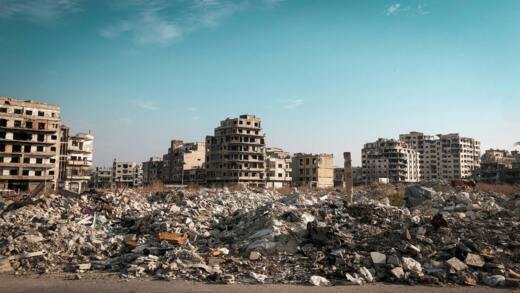
War is always hell. It is never the grand and heroic thing its advocates like to imagine from a safe distance. It is mangled bodies, terrified children, grieving parents, bombed out schools, shattered homes, ruined cities, and wounds that linger for decades after the speeches are over and the cameras have moved on. Professed followers of Christ should be the very last people to speak casually about war and the first to be deeply suspicious whenever it is presented as a moral necessity to be celebrated.
Our faith in Christ should never be allowed to be hijacked for political maneuvering and the killing of our fellow man. That should not be a radical statement, but basic clarity for all believers. There is no sound New Testament theology that calls believers to encourage and fund the killing of human beings and the destruction of nations so that prophecy can be fulfilled. History cannot be nudged along, nor can God’s purposes be assisted by human violence.
Christ did not come teaching His followers to sanctify military campaigns, and he did not call the church to function as the religious wing of state power. He did not tell us to bless destruction in his name. He said, “Blessed are the peacemakers.” He commanded us to love our neighbour. He told Peter to put away his sword.

Governments will fight, nations will go to war, rulers will make calculations, and armies will advance and retreat. The world is fallen, and scripture is not naive about that. There will be wars and rumours of wars, but that is a description of the world’s condition, not a commission for Christians to become cheerleaders for military escalation.
The church loses its soul the moment it becomes useful to political entities who crave power more than peace. Once faith is recruited to serve political appetite, it no longer speaks prophetically to power. It starts serving power and it becomes a slavish tool, or simply a mascot and a source of moral cover.
None of this requires Christians to be naive. Iran’s regime is not necessarily righteous. The Middle East (and the world beyond) is full of violent actors, hard realities, and genuine threats. Governments will respond as governments do, but Christians are not called to surrender moral judgement every time a crisis becomes complicated. No propaganda campaign should be able to turn bloodshed into virtue.
It is one thing to acknowledge that nations may go to war. It is another thing entirely to stir war fever among believers, to clothe political ambition in biblical language, and to make killing sound like faithfulness. Once that happens, something deeply corrupt has entered the conversation.
The cross is not to be hijacked as a weapon of statecraft, and nobody should dare to use the Gospel as a permission slip for human destruction. Christians should pray for restraint, for wisdom, for justice, and for peace. We should pray for civilians caught in the middle, for rulers to be humbled, and for the fever of conflict to be checked before it spreads further.
Believers are not called to sanctify war. We are, however, called to follow Christ in peace and love our neighbour as ourselves. That is one of the great commandments, not merely a suggestion.
Stay in the loop with exclusive news, stories, and insights—delivered straight to your inbox. No fluff, just real content that matters. Sign up today!