


Connect with us

Subscribe

Subscribe

Health & Wellness

Tiny fish offer great nutrition

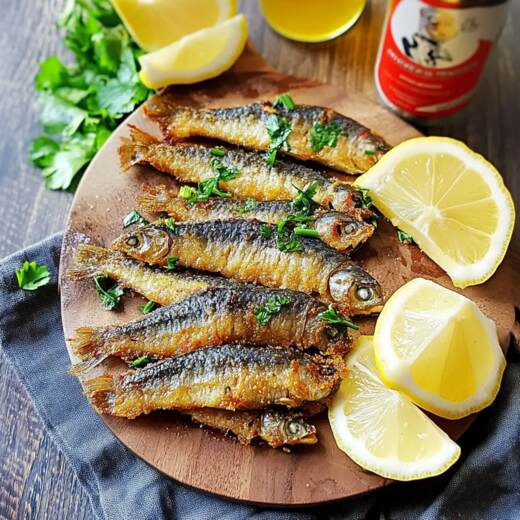
“Fresh, or tinned, little whole fish are affordable.”

Photo Courtesy of: Tasty Trend Ingredients

This week, I write from Tokyo, where small fish are eaten with remarkable regularity. A traditional Japanese breakfast includes such fish: salted, dried, grilled and served cold, consumed head-to-tail, bones, eyeballs and all. Small sardines are tucked into lunch boxes. Convenience stores sell little fish for snacking. It’s common to add sardines or mackerel to spaghetti sauce. Eating little fish is a way of life.

What is it about little fish? A large Japanese cohort study following more than 80,000 adults for roughly nine years found that people who regularly consumed small fish had significantly lower risks of death from all causes and from cancer, particularly among women. Even modest intake of just a few times per month was associated with measurable reductions in mortality.

Nutrition science offers an explanation. Small oily fish, such as sardines and anchovies, are rich in omega-3 fatty acids, along with minerals and high-quality protein that support cardiovascular, brain, and bone health. Emerging evidence suggests regular sardine consumption may also improve insulin response and reduce the risk of type 2 diabetes.

Eating the head, bones, and organs means the Japanese are consuming concentrated micronutrients such as calcium and vitamin A that are largely lost when fish are filleted. Westerners throw that nutrition away.

A reader recently reminded me of the Japanese word kuchisabishii, translated literally as “lonely mouth”. It describes eating out of boredom, not hunger. If mindless snacking is the need, then little dried and crunchy fish are a great choice.

A modelling study published in BMJ Global Health estimated that replacing some red-meat consumption with forage fish, species such as sardines, anchovies, and herring, could prevent up to 750,000 premature deaths annually by 2050. These fish are exceptionally nutrient-dense, and in comparison, to any other animal protein, have among the lowest environmental footprints, if one can say that of fish.

In North America, seafood choices tend to centre on large predatory fish such as salmon and tuna. These species are popular and nutritious, but they are also more expensive, accumulate more contaminants over long lifespans, and require greater ecological resources. Meanwhile, vast quantities of small forage fish are processed into animal feed.

There is a practical challenge, however. Achieving the levels of omega-3 fatty acids associated with cardiovascular benefit (particularly EPA and DHA) requires consistent intake. For many North Americans, eating small oily fish several times a week is a stretch, whether because of taste preferences, access, cost, or habit.

For that reason, supplementation can be a sensible adjunct. A high-quality fish oil provides concentrated, purified omega-3s without requiring major dietary overhaul. Readers can find the fish oil recommended by W. Gifford-Jones, MD, Certified Naturals Omega3X, in natural health food stores. It has earned the recommendation because it delivers high levels of EPA and DHA in a purified form that is tested for contaminants and formulated to enhance absorption.

None of these calls for dramatic change. It may simply mean replacing meaty meals with modest, more frequent servings of small fish. Imagine a tin of sardines on whole-grain toast, anchovies folded into pasta, or herring added to a salad. Frequency is better than occasional large portions.

Tokyo’s markets do not advertise their bountiful fish sections with signs proclaiming “Eat fish. Lower the risk of death.” Would it be a crime to encourage people to think about their mortality when grocery shopping? Fresh or tinned, little whole fish are affordable, accessible, and ordinary. Perhaps that is the lesson. Healthful patterns tend to endure when they are woven quietly into daily life, rather than announced as resolutions.

Newsletter Signup

Stay in the loop with exclusive news, stories, and insights—delivered straight to your inbox. No fluff, just real content that matters. Sign up today!


Dr. W. Gifford-Jones, MD is a graduate of the University of Toronto and the Harvard Medical School. He trained in general surgery at Strong Memorial Hospital, University of Rochester, Montreal General Hospital, McGill University and in Gynecology at Harvard. His storied medical career began as a general practitioner, ship’s surgeon, and hotel doctor. For more than 40 years, he specialized in gynecology, devoting his practice to the formative issues of women’s health. In 1975, he launched his weekly medical column that has been published by national and local Canadian and U.S. newspapers. Today, the readership remains over seven million. His advice contains a solid dose of common sense and he never sits on the fence with controversial issues. He is the author of nine books including, “The Healthy Barmaid”, his autobiography “You’re Going To Do What?”, “What I Learned as a Medical Journalist”, and “90+ How I Got There!” Many years ago, he was successful in a fight to legalize heroin to help ease the pain of terminal cancer patients. His foundation at that time donated $500,000 to establish the Gifford-Jones Professorship in Pain Control and Palliative Care at the University of Toronto Medical School. At 93 years of age he rappelled from the top of Toronto’s City Hall (30 stories) to raise funds for children with a life-threatening disease through the Make-a-Wish Foundation.  Diana Gifford-Jones, the daughter of W. Gifford-Jones, MD, Diana has extensive global experience in health and healthcare policy.  Diana is Special Advisor with The Aga Khan University, which operates 2 quaternary care hospitals and numerous secondary hospitals, medical centres, pharmacies, and laboratories in South Asia and Africa.  She worked for ten years in the Human Development sectors at the World Bank, including health policy and economics, nutrition, and population health. For over a decade at The Conference Board of Canada, she managed four health-related executive networks, including the Roundtable on Socio-Economic Determinants of Health, the Centre for Chronic Disease Prevention and Management, the Canadian Centre for Environmental Health, and the Centre for Health System Design and Management. Her master’s degree in public policy at Harvard University’s Kennedy School of Government included coursework at Harvard Medical School.  She is also a graduate of Wellesley College.  She has extensive experience with Canadian universities, including at Carleton University, where she was the Executive Director of the Global Academy. She lived and worked in Japan for four years and speaks Japanese fluently. Diana has the designation as a certified Chartered Director from The Directors College, a joint venture of The Conference Board of Canada and McMaster University.  She has recently published a book on the natural health philosophy of W. Gifford-Jones, called No Nonsense Health – Naturally!

Click to comment

Leave a Reply

Your email address will not be published. Required fields are marked *

Trending

Credit;https://thewalnutfoundation.com/ Credit;https://thewalnutfoundation.com/

Breaking the Silence: The Walnut Foundation is Bringing Life-Saving Prostate Cancer Screenings Directly to Black Men

Health

Kandice Henry – Shining light on youth in our community

Women Empowered

Navi Rai – Toronto’s cultural heartbeat

Classic Man

Black History Month in Quebec City

African History

Advertisement
Newsletter Signup

Stay in the loop with exclusive news, stories, and insights—delivered straight to your inbox. No fluff, just real content that matters. Sign up today!

Legal Disclaimer: The Toronto Caribbean Newspaper, its officers, and employees will not be held responsible for any loss, damages, or expenses resulting from advertisements, including, without limitation, claims or suits regarding liability, violation of privacy rights, copyright infringement, or plagiarism. Content Disclaimer: The statements, opinions, and viewpoints expressed by the writers are their own and do not necessarily reflect the opinions or views of Toronto Caribbean News Inc. Toronto Caribbean News Inc. assumes no responsibility or liability for claims, statements, opinions, or views, written or reported by its contributing writers, including product or service information that is advertised. Copyright © 2025 Toronto Caribbean News Inc.

Connect
Newsletter Signup

Stay in the loop with exclusive news, stories, and insights—delivered straight to your inbox. No fluff, just real content that matters. Sign up today!