


The FIFA World Cup is sold as a celebration of multicultural Toronto. We are told it will display our city, honour our diversity, inspire children, and bring the world to our doorstep. Of course, soccer is deeply woven into the life of Toronto’s diverse immigrant communities. Families of ethnic origins all understand the beauty of the game and soccer belongs to the people, but the people are paying a hefty price for a party few can afford to attend.
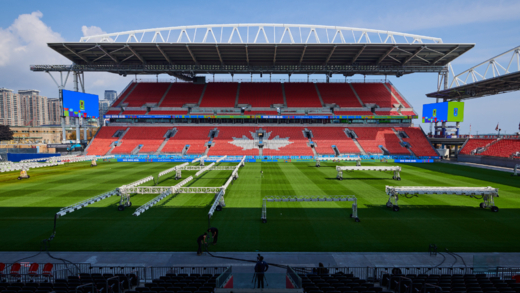
Toronto’s direct hosting budget for six World Cup matches is $380 million. That includes $104.34 million from the federal government, up to $97 million from the Ontario government, and $178.66 million from the City of Toronto through reserves, hotel taxes, commercial revenues, and other funding sources. BMO Field is being expanded to 45,736 seats for the tournament. Across six matches, that creates about 274,000 available seats.
Divide the $380 million direct hosting cost by those available seats and the public cost works out to $1,385 per seat. That includes about $380 per seat from the federal grant, $353 per seat from Ontario, and $651 per seat from City funding.
There is also more federal money layered on top. Ottawa announced up to $145 million for World Cup security across Canada, with about $45 million directed to Toronto. If that Toronto security money is counted on top of the direct hosting budget, the Toronto-related public cost rises to $425 million, or about $1,549 per available seat, and that is before a fan buys a ticket.
Reports show the cheapest face-value tickets to Canada’s opening match in Toronto were over $1,000. FIFA can point to limited lower-priced tickets, but that does not change the reality of living for ordinary families. A working parent with two children is not looking at a family outing. They are looking at rent money, grocery money, or car payment.
Now ask the harder question. What else could this money have done? Youth soccer is not free. In Toronto, ordinary recreational soccer often runs around $300 to $350 per child for an outdoor season. Winter house league can run around $495. Indoor select programs can reach $1,300 to $1,500. So let us use a conservative, middle-ground number of $500 per child.
At $500 per child, Toronto’s $380 million hosting bill could have paid for 760,000 youth soccer registrations. If we include the additional $45 million in federal security money directed to Toronto, that number rises to 850,000 child seasons. The federal and Ontario grants alone, about $201 million combined, could have covered more than 400,000 children.

Think about that. We could have celebrated the World Cup by putting hundreds of thousands of children on soccer fields. We could have paid registration fees for families in: Scarborough, Rexdale, Jane and Finch, Malvern, Brampton, Parry Sound, Bayfield, Aylmer, Port Dover, Kanata, Leamington, and every community in between where parents are choosing between sport and survival.
Instead, we are helping to underwrite six matches where most of those children will never sit in the stands because of the insurmountable financial barriers.
The same is true for facilities. Ontario does not just need World Cup branding. It needs year-round places to play. Thunder Bay’s approved indoor turf facility budget is $32.65 million. Calgary’s soccer-centre dome and artificial turf upgrade was $28 million. Brantford reviewed an indoor sport facility concept estimated around $20 million. Using those real-world benchmarks, Toronto’s $380 million hosting bill could have helped build roughly a dozen major indoor turf facilities, and closer to 15 or 19 if projects were built closer to the lower end of that range.
Imagine that legacy instead of this moment on the world soccer stage. Indoor soccer domes and turf fieldhouses across Ontario and full-size artificial turf fields under air-supported domes. Facilities that could be divided into smaller fields for children’s leagues. Winter training space for youth clubs and affordable booking hours for community teams. Change rooms, lighting, accessible washrooms, walking tracks, and multi-sport use for soccer, rugby, lacrosse, football, and school programs.
Canadian youth sport is already becoming a class divider. Government-cited research has shown that 44% of parents say they cannot afford to register their children in organized sport. Lower-income children participate less often in coached and competitive sport than higher-income children. That means talent is being wasted and confidence is being lost. Discipline, teamwork, health, and belonging are being denied because parents do not have the money.
A true legacy should be measured in enrolled children, fees reduced, fields built, lights installed, coaches trained, and indoor facilities opened for year-round play.
Stay in the loop with exclusive news, stories, and insights—delivered straight to your inbox. No fluff, just real content that matters. Sign up today!