

The room is full before he even enters it. Kingston heat presses against the glass walls of the conference hall, and the hum of anticipation moves through the crowd like a low drumline. Journalists shift in their seats. Artists lean forward. Even the Jamaica Tourist Board staff (usually composed, unbothered) stand a little straighter.
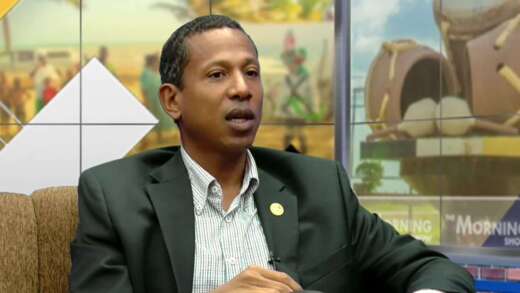
Then Shyne walks in. Not the platinum-selling rapper. Not the tabloid headline. Not the man the world thinks it already knows. He walks in as Moses Michael Levi Barrow, Leader of the Opposition in Belize, carrying a life that has been broken, rebuilt, and repurposed into something larger than fame.
The central question rises immediately; how does a man go from a Brooklyn barbershop to the House of Representatives, and what does that journey teach the Caribbean about power?
“Believing wasn’t enough, I had to know.”
He begins without theatrics. “I was six years old when the epiphany happened,” he says. “My mom was entering a deep depression because she thought I would die, and it was a very real possibility.” The room stills. He talks about being shot at 16. About watching friends “Get their brains blown out.” About promising his mother he would stay alive long enough to graduate high school. “I had to know I would survive Brooklyn, Vietnam,” he says. “Believing wasn’t enough, I had to know.”
His voice doesn’t tremble. It doesn’t brag. It simply tells the truth, the kind of truth that makes the room breathe differently.
He shifts into the story of his discovery, a scene so cinematic it feels scripted.
“I walked up to a man in the barbershop,” he says. “Could have been dangerous. Everybody in there had guns, but the spirit told me to go to him.” He laughs lightly, remembering the moment. “I hit him with 48 bars, with conviction. Like I was Jay‑Z. Like I was Tupac. Like I was B.I.G.”

The room erupts. He describes being taken to the industry gatekeepers who all wanted to sign him. He describes the hunger, the fearlessness, the knowing.
“I was not trying to be good on my block,” he says. “We wanted to be great in the world.”
Then he turns to the moment that changed everything: the 1999 Club New York shooting. He doesn’t sensationalize it. He doesn’t hide from it. He frames it.
“Instead, I went to prison.”
“I was hoping that by capturing my truth: the violence, the poverty, the pain, the powers that be would fix the issues I was rapping about.” He pauses. “Instead, I went to prison.”

He calls prison his “10‑year MBA” a decade of discipline, isolation, and spiritual transformation. He talks about studying Torah for 12 hours a day. He talks about changing his name to Moses Michael Levi Barrow. He talks about betrayal, sacrifice, and the cost of loyalty, but he never speaks as a victim.
When he describes returning to Belize, the tone shifts again. “I became Belize’s Music and Goodwill Ambassador,” he says. “I pledged and donated hundreds of thousands to build the music industry.” Then politics called. By 2021, he was Leader of the Opposition, a role that reframed his entire life. He looks out at the room. “You have to sacrifice everything,” he says. “Everything. Except your soul.”
A young rapper from Florida stands up during the Q&A. “What’s your favorite song?” he asks. Shyne smiles. “I don’t listen to my music,” he says. “It’s like watching yourself in the mirror all day.” What he does do is name the songs that shaped him:
- Bob Marley — “So Much Trouble in the World”
- Dennis Brown — “Revolution”
- His own “Bad Boyz” and “Diamonds and Mac 10s”
He explains why. “Bad Boyz saved my life,” he says. “It changed my life. It made my dreams come true forever.”
He ends with a warning disguised as wisdom. “Never give up. Never surrender. You have to know, and you have to sacrifice everything.” The room rises to its feet.
Shyne came to teach, and the Caribbean: artists, journalists, policymakers, needed this lesson.
Stay in the loop with exclusive news, stories, and insights—delivered straight to your inbox. No fluff, just real content that matters. Sign up today!