

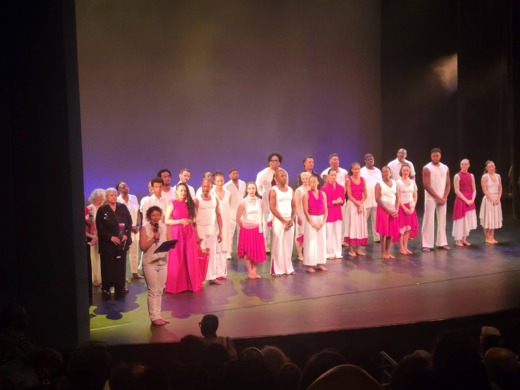

A sold-out audience gathered on April 25th, 2026, at Terminal Theatre on Queens Quay West for Legacy in Motion: A Tribute to Patrick Parson, an evening that moved beyond performance into remembrance, lineage, and cultural affirmation. Marking one year since the passing of Patrick Parson, the production honoured a figure widely credited with shaping Afro-Caribbean dance in Canada.
Founded in 1990, Ballet Creole has long held a defining place in the country’s dance landscape. Its guiding philosophy, “Diversity in Harmony Creating A New Energy,” was not simply stated, but embodied throughout the evening. The tribute echoed that ethos with precision, energy, and emotional weight.
The program was both retrospective and alive. Signature works such as Fête, Spirit of Carnival, and Soulful Messiah returned to the stage with renewed urgency. As described in the production materials, these pieces reflect Parson’s deep connection to African and Caribbean spiritual traditions expressed through rhythm, storytelling and collective memory. That connection was evident in the audience’s response: attentive, reverent, and visibly moved.
A central force behind the production was Kevin A. Ormsby, founder of KasheDance, who served as Marketing and Outreach Coordinator. His presence bridged past and present; as both performer and curator, his contributions underscored the enduring influence Parson had on generations of artists. The show’s structure (layering archival works with contemporary interpretation) allowed that influence to unfold clearly.
One of the evening’s most resonant moments came in its closing sequence, when dancers, drummers, and collaborators filled the stage together. Veterans of the company stood alongside emerging artists, visually reinforcing the continuity of Parson’s legacy. The Drey Dance Company’s performance of Shango, a piece rooted in spiritual invocation, stood out for its intensity and symbolism, described as honoring strength, fire and ancestral energy. The audience’s reaction suggested a shared understanding: this was not just performance, but ritual.

The tribute also extended beyond the stage. Dance Immersion reflected publicly on Parson’s impact, noting his role in fostering collaboration and providing space for artistic development. Their statement captured the breadth of his influence across institutions and communities.
Recognition of long-standing contributors added depth to the evening. Among them, Gabby Kamino was acknowledged for over three decades of service. A statement from Ballet Creole described her impact with clarity, “Your dedication, resilience and unwavering commitment to the art form have left an indelible mark in our soul.” The tribute’s inclusion of such acknowledgments ensured the narrative extended beyond a single figure to the ecosystem that sustained his vision.
The choice of venue carried its own resonance. Known to many as the former Premiere Dance Theatre, the Terminal Theatre holds historical significance for Ballet Creole. Returning to that space reinforced the sense of homecoming referenced in promotional materials, both literal and symbolic.
Looking forward, the company enters a new chapter under Artistic Director Yuhala Muy Garcia, a former student and rehearsal director. Her appointment signals continuity rather than departure, rooted in the same training and philosophy that defined Parson’s work. Support from institutions such as the Toronto Arts Council, Canada Council for the Arts, and Ontario Arts Council remains critical to sustaining that legacy.
The evening succeeded not only in honouring Patrick Parson, but in reaffirming the living, evolving nature of his contribution. The work continues: on stage, in studios, and within the communities he helped shape.
Stay in the loop with exclusive news, stories, and insights—delivered straight to your inbox. No fluff, just real content that matters. Sign up today!









Yuhala Muy Garcia
May 25, 2026 at 2:23 pm
Reading this article filled me with deep emotion, gratitude, and pride. As the Artistic Director of Ballet Creole, and as someone who had the privilege of learning directly under Patrick Parson’s guidance, *Legacy in Motion* was profoundly personal.
Patrick was not only a mentor and artistic visionary, he was a cultural force who dedicated his life to preserving, uplifting, and celebrating African and Caribbean traditions through dance, music, and storytelling. His work created space for generations of artists to find their voice, their confidence, and their connection to heritage.
This tribute represented more than remembrance. It was a living continuation of his philosophy, spirit, and artistic mission. Seeing former company members, emerging artists, musicians, collaborators, and community members come together on one stage reminded us that his legacy is alive — evolving through every dancer he inspired and every life he touched.
I am deeply thankful to all the performers, creative teams, supporters, arts councils, cultural organizations, and audience members who stood with us for this important evening. Special gratitude to Kevin A. Ormsby for his continued dedication and support in helping honour Patrick’s memory and vision.
Stepping into this role carries both responsibility and purpose. I move forward committed to preserving the foundation Patrick built while continuing to create new pathways for Afro-Caribbean dance in Canada and beyond. His teachings remain at the heart of everything we do.
Thank you for capturing the spirit, emotion, and significance of this tribute with such care and respect. It means more than words can express.