

Editor’s Note: Although this article reflects the context of its original publication, its central questions continue to shape conversations across our Caribbean communities. Read it through today’s lens.
On June 4th, 2026, Black leaders gathered on Parliament Hill in Ottawa to address concerns about the federal government’s newly announced Advisory Council on Rights, Equality, and Inclusion. The concern was straightforward: the council’s initial mandate did not explicitly mention anti-Black racism, and its announced membership did not include any Black representatives.
A spokesperson for Canadian Identity and Culture Minister Marc Miller later stated that the council is still being formed and that additional members will be announced in the coming weeks. Yet for many of the speakers at the press conference, the issue was larger than a single appointment. It was about a familiar pattern.
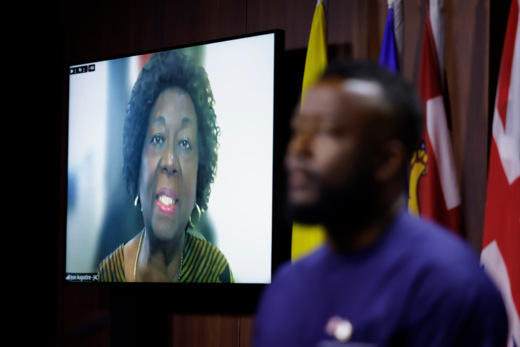
I watched the event on CPAC’s YouTube platform, where the Honourable Jean Augustine – Former Member of Parliament and the first Black woman elected to Canada’s House of Commons, was joined by: Nicholas Marcus Thompson – Co-Chair of the National Employment Equity Council, Ketty Nivyabandi – Secretary General of Amnesty International Canada, and Bishop Ransford Jones – Chairman of Canadian Black Clergies and Allies. While each speaker brought a different nuance, they were not introducing a new issue. They were revisiting one that Canada has already studied, documented, and acknowledged. This was another press conference that revealed a deep frustration that Black Canadians continue to find themselves explaining, documenting, and justifying barriers that governments have already acknowledged exist.
Speaking on behalf of organizations and communities that have spent years documenting the impacts of anti-Black racism in Canada, the leaders expressed frustration that issues already acknowledged by governments, commissions, reviews, and public institutions continue to require explanation. “We are tired of being an afterthought,” said Augustine. That statement captured the mood of the press conference.

Thompson referenced lessons learned through the Employment Equity Act Review, which concluded that Black workers face distinct and persistent barriers. Nivyabandi warned that excluding Black representation from a council tasked with addressing rights, equality, and inclusion risks undermining its credibility from the outset. Jones emphasized the importance of including Black faith communities, which have historically played a significant role in advancing civil rights, social justice, and community development.
Collectively, their message was not one of opposition to other communities receiving support. In fact, the speakers repeatedly welcomed efforts to address antisemitism, Islamophobia, anti-Indigenous racism, and other forms of discrimination. Their concern was that anti-Black racism appeared absent from a conversation where it should have been explicitly recognized as done by the previous government.
Listening to the speakers, I found myself returning to a question that was never directly asked, but seemed to linger throughout the press conference: How many times must Black people explain the same problem before action follows? The question matters because the existence of anti-Black racism is no longer the subject of serious debate as governments have acknowledged it, reviews have documented it, institutions have studied it and communities have lived it. Yet here we are in 2026. Black leaders are still gathering in front of cameras and before microphones to explain why anti-Black racism deserves explicit recognition within a council dedicated to rights, equality, and inclusion.
The emotional fatigue of that reality could be felt throughout the press conference, not because the speakers lacked conviction, but because they carried the burden of revisiting a conversation that many believed had already been put forward many times. Progress begins with naming problems, but it cannot end there. The question is what happens when acknowledgment repeatedly fails to become action. How do we move from acknowledgment to accountability, and from representation to results?
Stay in the loop with exclusive news, stories, and insights—delivered straight to your inbox. No fluff, just real content that matters. Sign up today!